
Dental bridge cost in North York
In short: a dental bridge is priced by the unit: each supporting crown and each replacement tooth counts as one. A bridge replacing one tooth is usually three units. Material and any work needed on the supporting teeth also affect the total. Bridges are a major service under insurance plans; coverage under the Canadian Dental Care Plan is limited and needs pre-authorization.
What a bridge fee includes
A bridge is made as one piece by a dental laboratory. The fee covers:
- Preparing the supporting teeth under local anaesthetic
- A scan or impression and shade selection
- A temporary bridge while yours is made
- The laboratory-made bridge
- Fitting, bite adjustment and cementing
What changes the cost of a bridge
- 1
Number of units
One missing tooth usually means a three-unit bridge. Two missing teeth, or the need for an extra supporting tooth, adds units.
- 2
Material
Zirconia, all-ceramic and porcelain bonded to metal carry different laboratory costs.
- 3
The supporting teeth
They may need fillings, build-ups or root canal treatment before they can carry a bridge.
- 4
Type of bridge
A bonded bridge with a wing behind the neighbouring tooth needs less preparation and can cost less, where it is suitable.
- 5
Implant-supported bridges
A bridge on implants is priced as implant treatment and costs more.
Bridge, implant or partial denture?
For a single missing tooth, a bridge and an implant are often in a similar price range once everything is counted. A bridge is finished in weeks and needs no surgery, but the teeth each side are cut down, and if one of them fails the whole bridge is affected. An implant leaves the neighbours alone and usually lasts longer.
A partial denture costs least and can replace several teeth at once, but it is removable. If the teeth beside the gap already need crowns, a bridge makes particular sense. Your dentist will set out all three with fees and expected life.
What plans pay toward bridges
Insurance plans usually pay a percentage for bridges as major work, up to the annual maximum, and may refuse to replace a bridge within a set number of years. Some plans have a missing tooth clause that excludes teeth lost before you joined. A predetermination answers these questions before treatment.
Under the Canadian Dental Care Plan, fixed bridges are covered only in limited circumstances and require approval in advance; removable partial dentures are the usual covered option. We check your plan and tell you where you stand.
Is a bridge estimate useful for you?
An exam gives you a real number. Costs depend on your mouth, so the estimate follows the examination.
Ways to manage the cost
- Ask for a predetermination to check for a missing tooth clause
- Compare an implant and a partial on the same estimate
- Clean under the bridge daily so it lasts
- Use the current benefit year’s maximum
From question to written estimate
- 1
Request a visit
Send the form or call. Tell us what you want priced and whether you have insurance or a Canadian Dental Care Plan card, so we can book the right amount of time.
- 2
Examination
Your dentist examines the tooth or area and takes only the X-rays needed to plan. An estimate given without looking is a guess; this step is what makes the number reliable.
- 3
Options and an itemised estimate
You hear the options, including the simplest one, with the fee for each procedure listed separately. Take it home and think about it; there is no obligation to go ahead.
- 4
Coverage check
We bill insurers directly and can send a predetermination or a CDCP pre-authorization, so you know the amount you would pay yourself before treatment is booked.
How dental fees are set in Ontario
Dental care in Ontario is not covered by OHIP for most adults, so treatment is paid for by an insurance plan, a government program such as the Canadian Dental Care Plan, or the patient. Each dental office sets its own fees. Most refer to the suggested fee guide published each year by the Ontario Dental Association, which lists a code and a suggested fee for every procedure.
Insurance plans and the Canadian Dental Care Plan each pay according to their own fee schedules, which can be lower than a clinic's fee. The difference, plus any percentage your plan does not cover, is the part you pay. That is why two people having the same treatment can pay different amounts.
Know the cost first
After an exam, your dentist can give you an estimate listing each procedure. For larger treatment we can send it to your insurer as a predetermination, so you see what the plan will pay before you start.
Ask for an estimateThree ways patients pay
CDCP
- Bring
- Your CDCP card and photo ID
- We do
- Check what the plan covers before treatment and tell you about any amount you would pay
Work or private insurance
- Bring
- Your plan and member number
- We do
- Bill your insurer directly, so you pay only the part your plan doesn't cover
No insurance
- Ask
- For a cost estimate before treatment starts
- Pay
- All common payment methods are accepted
Questions about bridge cost
Each crown or replacement tooth in the bridge. Fees are charged per unit.
Sometimes at the start; over many years the costs are often similar.
Usually partly, as a major service, subject to plan rules.
Often ten to fifteen years with careful cleaning.
That is treated first and billed separately.
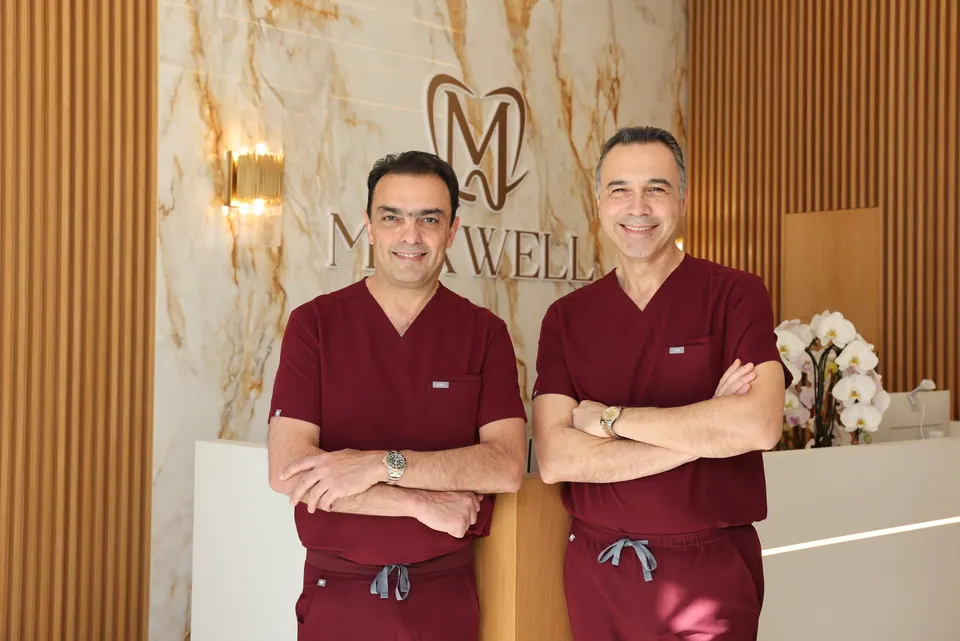
Two general dentists in North York
Dr. Ali Ellioun has more than 30 years of clinical experience, with particular interests in restorative dentistry, root canal treatment, oral surgery, prosthodontics and implants. Dr. Shahyar Ameryoun has over 25 years of experience in root canal therapy, crowns and bridges, restorative and preventive care, cosmetic dentistry, extractions and emergency care. Both are registered with the Royal College of Dental Surgeons of Ontario.
Maxwell Dental is at 716 Sheppard Ave West, at street level with free parking. We are open Monday to Friday from 10 am to 6 pm and Saturday from 9 am to 4 pm, and the team works in English, Farsi and Tagalog. Your first visit is an exam with any X-rays your dentist recommends, followed by a plan and costs before anything is started.
Wilson Heights · Clanton Park · Bathurst Manor · Lansing–Westgate · Armour Heights · Westminster–Branson · Yonge and Sheppard
- Dental bonding cost→
- Emergency dental visit cost→
- Sedation dentistry cost→
- Night guard cost→
- All cost guides→
This page gives general information and is not a quote. Fees depend on an examination and on your plan. No fee on this page is a promise of coverage.
Last updated: November 24, 2026