
A Tagalog-speaking dental clinic in North York
In short: Maxwell Dental at 716 Sheppard Ave West in North York works in Tagalog as well as English and Farsi. If you are looking for a Filipino dentist near you in Toronto, you can ask for your visit in Tagalog when you book, and have your treatment plan, costs and coverage explained in the language you are most comfortable with. The clinic is open Monday to Saturday.
Why it helps to speak your own language
Most Filipinos in Toronto speak English well, so why look for a Tagalog-speaking clinic? Because a dental visit is not an ordinary conversation. Describing a pain that comes and goes, admitting that you are nervous, or asking what a treatment will really cost is easier in the language you think in. Small details, such as when the pain started or which medicines you take, shape the diagnosis.
It also matters for the people you bring. Parents and grandparents who have joined family here, and relatives who are visiting, are often more comfortable in Tagalog. They should be able to hear the plan directly, not only through a son or daughter translating.
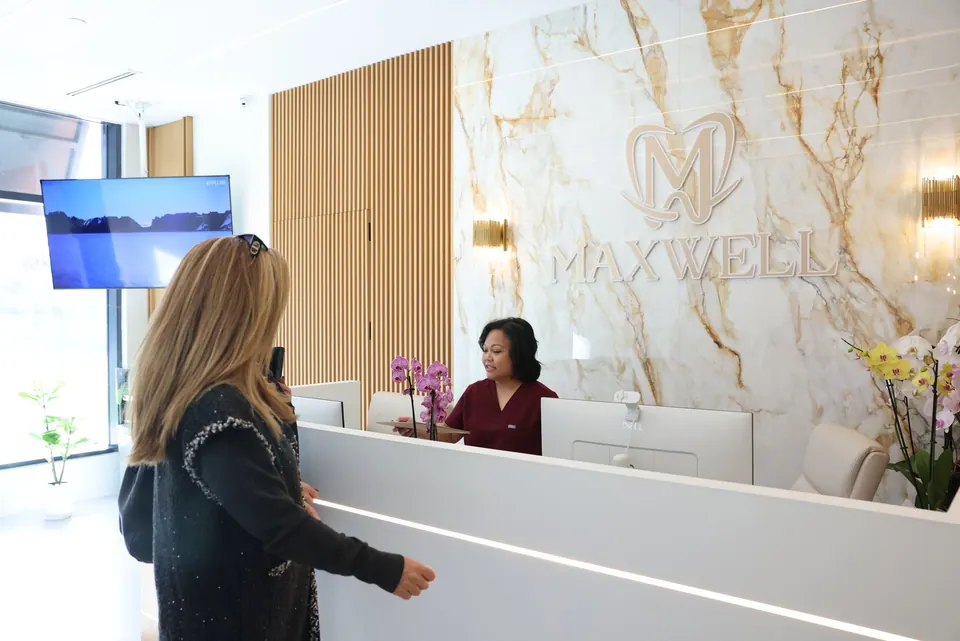
What you can do in Tagalog at Maxwell Dental
Tell us you prefer Tagalog when you call or send the online request, so that we can plan your visit around it. The home, about and contact pages of this website are in Tagalog, and treatment guides in Tagalog are being added.
Your dentist explains what was found, what the options are and what each one costs before anything is started. Ask as many questions as you need. If you want to discuss it with your family first, you will be given the plan so you can decide at home.
The dentists at Maxwell Dental, Dr. Ali Ellioun and Dr. Shahyar Ameryoun, are general dentists registered in Ontario. Anyone can confirm a dentist's registration on the public register of the Royal College of Dental Surgeons of Ontario, linked at the bottom of this page.
What would make your visit easier?
Tell us when you book. Mention Tagalog and anything else on this list, and we will plan the visit around it.
Dental care here and back home
Many people put off dental care in Canada because they have heard it is expensive, and plan to have it done on a trip home. That works for some planned treatment, but teeth do not wait for a flight: a small cavity that is cheap to fill becomes a root canal or an extraction. Regular exams and cleanings here usually cost less than the problems they prevent, and many plans cover them in full or in large part.
If you do have treatment in the Philippines, bring the records back with you: X-rays, the brand and size of an implant, the date of a root canal. A photo on your phone is enough. If something needs attention between trips, your dentist here can then see what was done.
A few things work differently here. Fees are based on a suggested fee guide, and you are entitled to an estimate before treatment. Antibiotics are prescription-only and are not given for an ordinary toothache. Extraction is rarely the first suggestion; dentists here try to save a tooth when it can be saved, and will explain what that involves and what it costs so that you can choose.
Treatments our Tagalog-speaking patients ask about most
The questions we hear most often are about cleanings and fillings that have been put off, toothache and extractions, replacing missing teeth with a partial denture, bridge or implant, and braces or clear aligners for teenagers and adults. Each has its own page on this site, with the steps, the usual number of visits and how plans treat it.
Words differ a little between the two countries. A "pasta" is a filling here, "pustiso" is a denture, and a "jacket" is a crown. If a tooth has been aching, do not wait until it has to be pulled: ask whether it can be saved, what that costs, and what the alternatives are. Your dentist will give you the options side by side so that you can decide what fits your budget and your plans.
Shift work, caregiving and Saturdays
Many Filipinos in Toronto work in health care, caregiving and other jobs with shifts that make weekday appointments difficult. Maxwell Dental is open on Saturdays from 9 am to 4 pm, and on weekdays from 10 am to 6 pm. Tell us your schedule when you book. Family members can often be seen one after another on the same day, which saves a second trip.
If you work as a caregiver or are on a work permit, check whether your employer provides a dental plan, and bring the details. If you have no plan, ask us for an estimate first. An exam shows what is urgent and what can safely wait, so you can spread treatment over time.
Paying for care: insurance and the CDCP
Provincial health insurance (OHIP) does not pay for routine dental care for adults. Most people pay through a workplace or private plan, through the federal Canadian Dental Care Plan if they qualify, or themselves. Maxwell Dental bills insurers directly and accepts the CDCP, and we check your coverage before treatment so you know what you would pay.
Our guide to dental care for newcomers explains the main programs and what to do if you have no coverage yet. It is available in English, Tagalog and Farsi.
Questions about dental care in Tagalog
Yes. Say that you prefer Tagalog when you call, or use the Tagalog version of the online request form.
Yes, Saturdays from 9 am to 4 pm. The clinic is closed on Sundays.
Yes. We check your CDCP coverage before treatment and tell you about any amount you would pay.
Yes. Visitors can be seen and pay for the visit themselves. If they have travel insurance, check whether it includes emergency dental care.
Often, yes. Ask when you book and we will try to schedule your appointments one after another.
Yes. Bring any X-rays or records you have so your dentist can see what was done.
This page gives general information and does not replace an examination or official program information. Programs and rules change; check the official sources below.
Last updated: November 24, 2026