
Gum disease treatment in North York
In short: gum disease is an infection of the gums and the bone that holds your teeth. Early gum disease, called gingivitis, can be reversed with cleaning and home care. Later stages need deeper cleaning and regular maintenance to protect the teeth.
Gum disease treatment, explained
Gum disease begins when plaque along the gumline triggers inflammation. In gingivitis the gums are red, puffy and bleed, but the bone is intact and the condition is reversible. If it continues, the gum detaches from the tooth, forming pockets where bacteria thrive, and the bone that holds the tooth starts to dissolve. This is periodontitis, and bone that is lost does not grow back on its own.
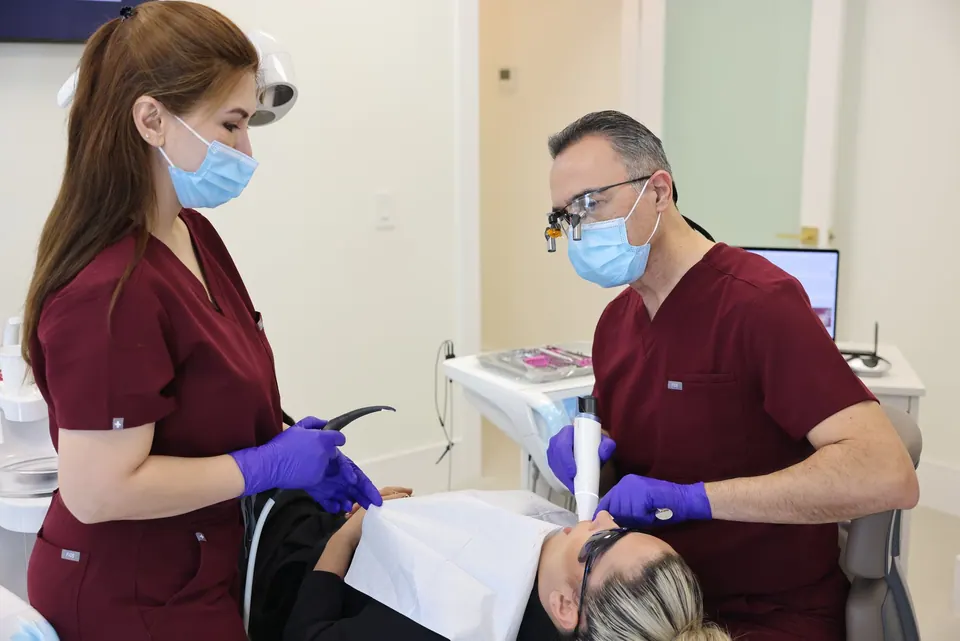
It is usually painless until advanced, which is why measuring the gums at check-ups matters. A small ruler called a probe records the depth of the space around each tooth.
Is gum disease treatment right for you?
One tick is enough to ask. Your dentist will confirm what you need.
Who it suits
Treatment is for anyone with bleeding gums, deep pockets, receding gums, loose teeth or persistent bad breath. Risk is higher if you smoke, have diabetes, are pregnant or have a family history of gum disease. Advanced cases may be referred to a certified specialist in periodontics.
What you gain
- Stops bleeding and reduces inflammation
- Slows or halts bone loss
- Helps keep your natural teeth
- Fresher breath
Step by step
- 1
Measure
We measure the pockets around each tooth.
- 2
Clean
Plaque and tartar are removed above and below the gumline.
- 3
Review
We re-check healing in a few weeks.
- 4
Maintain
Cleanings every three to four months if needed.
For gingivitis, a thorough cleaning and better home care are usually enough. For periodontitis, scaling and root planing cleans the root surfaces under the gum, usually one section of the mouth at a time with numbing. After healing, pockets are measured again to see how the gums have responded.
What it feels like
Numbed for deep cleaning. If you are nervous, say so when you book. Your dentist explains each step before it happens, agrees a signal you can use to pause, and goes at your pace.
- Care in English, فارسی or Tagalog
- Questions welcome at every step
- Ask about sedation if anxiety keeps you away
Afterwards
Gums may be tender and teeth sensitive to cold for a few days. As swelling goes down the gums may sit slightly lower, which is a sign of healing. Daily cleaning between the teeth is what keeps the result.
Do
- Brush twice daily and clean between teeth
- Come to every maintenance visit
- Tell us about diabetes or new medicines
Don't
- Smoke; it slows healing
- Stop home care when bleeding stops
- Skip reviews
Call us if gums swell, hurt or a tooth loosens.
What you can do at home
Treatment in the chair removes what has built up; what you do each day decides whether it comes back. Brush twice daily along the gumline with a soft or electric brush. Clean between every tooth once a day with interdental brushes sized by your dentist or hygienist, or with floss where the gaps are tight. If you smoke, stopping is the single most helpful change, because smoking hides bleeding and slows healing. Keep diabetes well controlled, and tell us about new medicines, since some cause dry mouth or gum swelling.
Three useful questions
- How deep are my pockets, and where?
- Which brushes should I use between my teeth?
- How often do I need maintenance cleanings?
Alternatives to gum disease treatment
There is no home remedy that removes tartar from under the gums. Mouthwash reduces bacteria temporarily but does not treat pockets. Without treatment, periodontitis progresses and teeth are eventually lost.
What you pay
Fees are based on the units of scaling time needed. The CDCP and insurance plans cover scaling within yearly limits; more may be approved when gum disease is documented. We check your plan first.
CDCP
- Bring
- Your CDCP card and photo ID
- We do
- Check what the plan covers before treatment and tell you about any amount you would pay
Work or private insurance
- Bring
- Your plan and member number
- We do
- Bill your insurer directly, so you pay only the part your plan doesn't cover
No insurance
- Ask
- For a cost estimate before treatment starts
- Pay
- All common payment methods are accepted
Questions about gum disease treatment
Gingivitis can be reversed. Later stages are controlled, not cured, with treatment and maintenance.
It is associated with conditions such as diabetes, so tell us about your health.
The bacteria can be passed in saliva, but disease depends on each person's plaque control and susceptibility.
Receded gums don't regrow, but healthy gums tighten around the teeth after treatment.
Usually every three to four months to keep the disease controlled.
Gum disease is linked with diabetes control and other conditions, so treating it supports general health.
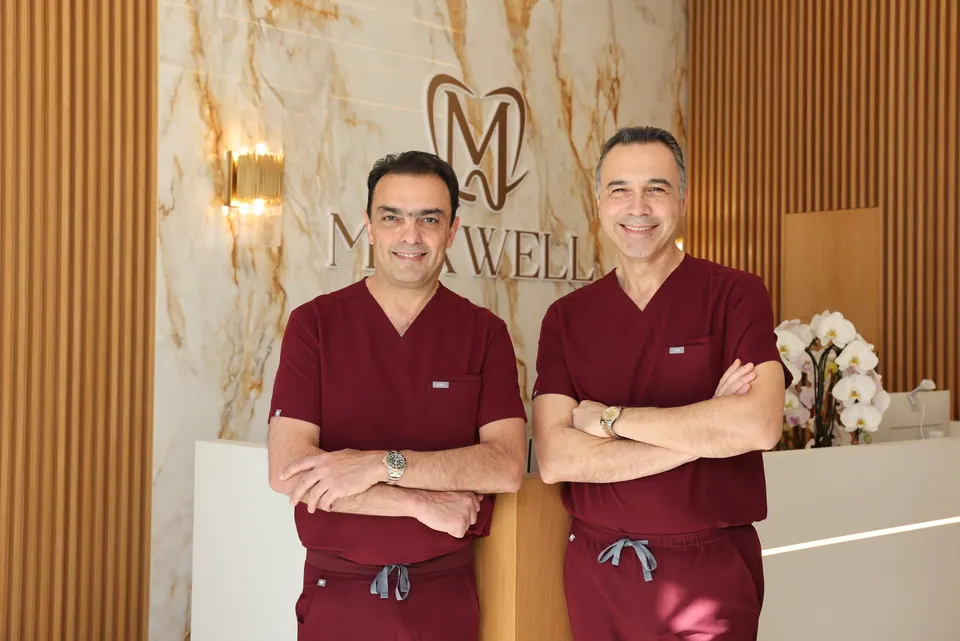
Two general dentists
Dr. Ali Ellioun has more than 30 years of clinical experience. He enjoys all aspects of general dentistry, with particular interests in restorative dentistry, root canal treatment, oral surgery, prosthodontics and implants.
Dr. Shahyar Ameryoun has over 25 years of experience in root canal therapy, crowns and bridges, restorative and preventive care, cosmetic dentistry, extractions and emergency care.
Both are registered with the Royal College of Dental Surgeons of Ontario and take the time to explain your options before treatment starts.
Coming to Maxwell Dental
Maxwell Dental is at 716 Sheppard Ave West in North York, at street level, with free parking on site. We are open Monday to Friday from 10 am to 6 pm and Saturday from 9 am to 4 pm. The team works in English, Farsi and Tagalog, so tell us which you prefer when you book.
If you are in pain, call (647) 479-4842 and we will tell you the earliest time we can see you.
Your first visit follows four steps: you request a time by phone or the form, complete your registration, have an exam with any X-rays your dentist recommends, and then hear your plan and costs before anything is started. Insurers are billed directly, CDCP patients are welcome, and you can ask for a cost estimate at any point.
Before your appointment
- Bring photo ID and your CDCP or insurance card if you have one
- Bring a list of the medicines you take
- New patients complete a short registration form; ask for it in advance if you like
- Tell us about any health changes since your last visit
Wilson Heights · Clanton Park · Bathurst Manor · Lansing–Westgate · Armour Heights · Westminster–Branson · Yonge and Sheppard
This page gives general information about gum disease treatment and does not replace an examination. Your dentist will advise what is right for your mouth and health.
Last updated: November 24, 2026