
Full and partial dentures in North York
In short: dentures are removable replacements for missing teeth. A full denture replaces all the teeth in one jaw; a partial denture fills gaps and clips to remaining teeth. Modern dentures are shaped to your gums and bite.
Full and partial dentures, explained
Losing teeth changes how you eat, speak and look, and the face can lose support. Dentures replace the missing teeth and gum tissue with an acrylic base and artificial teeth shaped to your mouth. A full denture rests on the gums of a jaw with no teeth; a partial denture fills spaces and is steadied by the remaining teeth.
Making a good denture is a step-by-step process of measuring, trying and adjusting. You see and approve the look of the teeth in wax before the denture is finished.
Is full and partial dentures right for you?
One tick is enough to ask. Your dentist will confirm what you need.
Who it suits
Full dentures suit people who have lost, or are about to lose, all the teeth in a jaw. Partial dentures suit people with several gaps and healthy remaining teeth. If remaining teeth need to be removed, an immediate denture can be fitted on the same day so you are not without teeth while the gums heal.
What you gain
- Restores chewing, speech and facial support
- No surgery required
- Usually the lowest-cost way to replace many teeth
- Can be relined or added to as your mouth changes
Step by step
- 1
Impressions
We record your gums and bite.
- 2
Try-in
You try a wax model and approve the look.
- 3
Fitting
The finished denture is fitted and adjusted.
- 4
Review
We fine-tune any sore spots.
Upper dentures usually stay in place well through suction. Lower dentures have less to hold on to and take more practice; if a lower denture remains loose, two or more implants can be used to clip it in place.
What it feels like
Painless fittings. If you are nervous, say so when you book. Your dentist explains each step before it happens, agrees a signal you can use to pause, and goes at your pace.
- Care in English, فارسی or Tagalog
- Questions welcome at every step
- Ask about sedation if anxiety keeps you away
Afterwards
New dentures feel bulky at first and you may make more saliva. Start with soft foods cut small, chew on both sides, and read aloud to practise speech. Sore spots are common in the first weeks and are eased with small adjustments, so come back if anything rubs.
Do
- Clean dentures daily
- Take them out at night
- Come for yearly checks
Don't
- Use hot water; it can warp them
- Adjust them yourself
- Sleep in them unless advised
Call us if you have sore spots that don't settle in a few days.
Living well with dentures
Eating takes practice. Start with soft foods, take small bites and chew slowly on both sides at once to keep the denture steady. Sticky and very hard foods are the most difficult. Speech returns to normal quickly if you read aloud for a few minutes each day. Take dentures out at night, brush them, and soak them in water or denture cleaner so they don't dry out and warp. Brush your gums, tongue and any remaining teeth morning and night. Have your mouth and dentures checked once a year, even with no natural teeth, because the gums and bone keep changing.
Three useful questions
- Full, partial or implant-supported: which suits me?
- How long will my dentures last?
- What does my plan cover and how often?
Alternatives to full and partial dentures
Implant-supported dentures are more stable. Bridges or individual implants replace a few teeth without a removable plate. Your dentist will go through what is realistic for your mouth and budget.
What you pay
Cost depends on the type (full, partial with acrylic or metal framework, immediate) and any extractions needed. Dentures are among the services covered by the CDCP and by many insurance plans, usually once in a set number of years. We check before starting.
CDCP
- Bring
- Your CDCP card and photo ID
- We do
- Check what the plan covers before treatment and tell you about any amount you would pay
Work or private insurance
- Bring
- Your plan and member number
- We do
- Bill your insurer directly, so you pay only the part your plan doesn't cover
No insurance
- Ask
- For a cost estimate before treatment starts
- Pay
- All common payment methods are accepted
Questions about full and partial dentures
Dentures are among the services the plan lists; we check your coverage before treatment.
Usually several years; gums change, so they need relining or replacing over time.
Most people adapt over a few weeks, with eating and speaking improving steadily.
A well-fitting denture often doesn't need it. If yours has become loose, it may need a reline.
Brush them daily with a denture brush and cleaner, over a basin of water in case you drop them.
It's healthier for the gums to take them out at night unless your dentist advises otherwise.
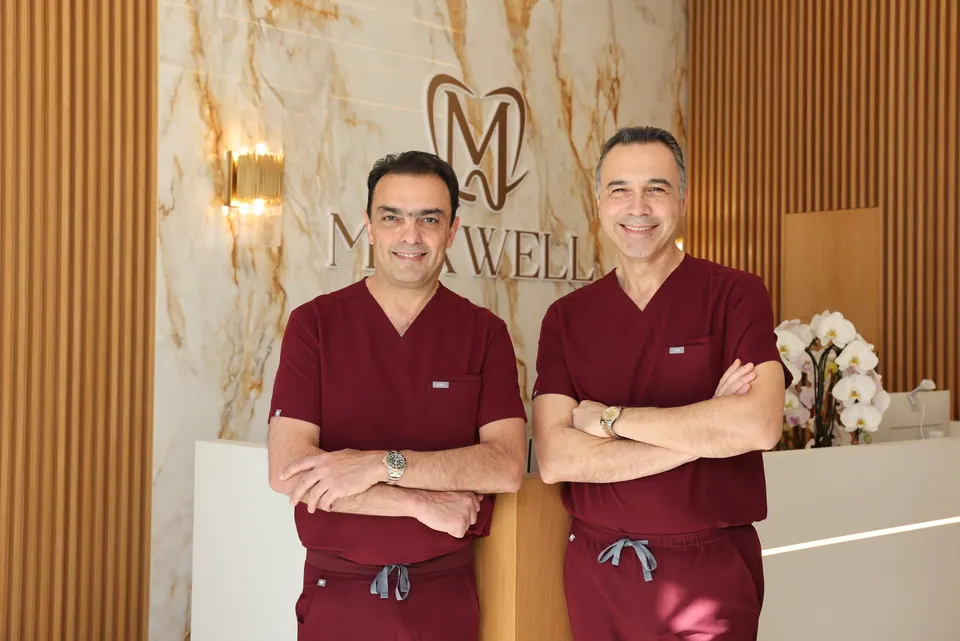
Two general dentists
Dr. Ali Ellioun has more than 30 years of clinical experience. He enjoys all aspects of general dentistry, with particular interests in restorative dentistry, root canal treatment, oral surgery, prosthodontics and implants.
Dr. Shahyar Ameryoun has over 25 years of experience in root canal therapy, crowns and bridges, restorative and preventive care, cosmetic dentistry, extractions and emergency care.
Both are registered with the Royal College of Dental Surgeons of Ontario and take the time to explain your options before treatment starts.
Coming to Maxwell Dental
Maxwell Dental is at 716 Sheppard Ave West in North York, at street level, with free parking on site. We are open Monday to Friday from 10 am to 6 pm and Saturday from 9 am to 4 pm. The team works in English, Farsi and Tagalog, so tell us which you prefer when you book.
If you are in pain, call (647) 479-4842 and we will tell you the earliest time we can see you.
Your first visit follows four steps: you request a time by phone or the form, complete your registration, have an exam with any X-rays your dentist recommends, and then hear your plan and costs before anything is started. Insurers are billed directly, CDCP patients are welcome, and you can ask for a cost estimate at any point.
Before your appointment
- Bring photo ID and your CDCP or insurance card if you have one
- Bring a list of the medicines you take
- New patients complete a short registration form; ask for it in advance if you like
- Tell us about any health changes since your last visit
Wilson Heights · Clanton Park · Bathurst Manor · Lansing–Westgate · Armour Heights · Westminster–Branson · Yonge and Sheppard
This page gives general information about full and partial dentures and does not replace an examination. Your dentist will advise what is right for your mouth and health.
Last updated: November 24, 2026