
How to clean retainers and aligners
In short: clean clear aligners and retainers every time you take them out: rinse in cool water, brush gently with a soft brush and clear, unscented soap, and soak them with cleaning crystals or tablets a few times a week. Avoid hot water, coloured mouthwash and abrasive toothpaste. Brush your teeth before putting them back, so that food and sugar are not trapped against the enamel.
What damages aligners and retainers
Most problems come from a few habits:
- Hot water, which warps the plastic
- Toothpaste, which scratches it and makes it cloudy
- Coloured mouthwash, coffee, tea and red wine, which stain it
- Eating or drinking anything but water with them in
- Leaving them out of the case, where they dry out, get lost or are chewed by pets
A daily routine
- 1
Morning
Remove, rinse in cool water and brush gently inside and out. Brush and floss your teeth before putting them back.
- 2
At meals
Take them out, put them in the case, and rinse them before they go back in. Brush or at least rinse your mouth first.
- 3
Evening
Brush them again and check for cracks or rough edges.
- 4
A few times a week
Soak in cleaning crystals or a retainer tablet for the time on the packet, then rinse well.
- 5
At check-ups
Bring them with you so the fit and wear can be checked.
Attachments, white film and odour
Attachments are small tooth-coloured bumps bonded to certain teeth to help aligners grip. They can pick up stain at the edges, so brush around them carefully; they are polished off at the end of treatment. If an attachment comes off, tell us, because the aligner may not track properly without it.
A white film on an aligner is dried saliva and plaque; soaking and gentle brushing remove it. Persistent odour usually means the aligners are going back onto unbrushed teeth, or are being stored damp in a closed case. Let the case dry and wash it too.
Cleaning a fixed retainer
A wire bonded behind the front teeth cannot be taken out, so plaque and tartar collect around it. Thread floss under the wire with a floss threader, or use small interdental brushes, once a day. Regular cleanings remove the tartar that builds up there, and the bond on each tooth is checked at the same visit.
What is going wrong?
Bring your questions. Your dentist will go through what applies to you at an exam.
Practical tips
- Rinse every time you remove them
- Use clear soap, not toothpaste
- Never use hot water
- Keep them in the case when out
What happens when you come in
- 1
You tell us what is wrong
Send the form or call during opening hours. Urgent problems are fitted in around booked appointments, and we tell you the earliest time we can see you.
- 2
Examination
Your dentist looks at the area, tests the tooth or gum gently and takes only the X-rays needed to find the cause. You are shown what was found.
- 3
Options and costs
You hear the options, including the simplest one, how many visits each takes and what each costs. Nothing is started until you agree.
- 4
Treatment and follow-up
Pain is dealt with first. Anything that needs a second visit is booked before you leave, with written aftercare in English, and explained in Farsi or Tagalog if you prefer.
How dental fees are set in Ontario
Dental care in Ontario is not covered by OHIP for most adults, so treatment is paid for by an insurance plan, a government program such as the Canadian Dental Care Plan, or the patient. Each dental office sets its own fees. Most refer to the suggested fee guide published each year by the Ontario Dental Association, which lists a code and a suggested fee for every procedure.
Insurance plans and the Canadian Dental Care Plan each pay according to their own fee schedules, which can be lower than a clinic's fee. The difference, plus any percentage your plan does not cover, is the part you pay. That is why two people having the same treatment can pay different amounts.
Know the cost first
After an exam, your dentist can give you an estimate listing each procedure. For larger treatment we can send it to your insurer as a predetermination, so you see what the plan will pay before you start.
Ask for an estimateKeeping problems from coming back
Most dental problems start small and silently. Brushing twice a day with fluoride toothpaste, cleaning between the teeth once a day and keeping sugary or acidic food and drink to mealtimes prevent the majority of decay and gum disease.
Regular exams find the rest early. A check-up every six months, or at the interval your dentist advises, includes a look at every tooth, the gums and the soft tissues, and X-rays when they are due. A small problem found at an exam is nearly always simpler and less costly to treat than the same problem found because it hurts.
If you have not seen a dentist for some time, you are welcome here without judgement. Tell us what worries you, whether that is cost, time or fear, and we will plan around it. Canadian Dental Care Plan patients are welcome and insurers are billed directly.
Habits that protect teeth
- Soft brush, two minutes, twice a day
- Floss or interdental brushes daily
- Water between meals
- A night guard if you grind; a mouthguard for contact sports
- No smoking or vaping
Three ways patients pay
CDCP
- Bring
- Your CDCP card and photo ID
- We do
- Check what the plan covers before treatment and tell you about any amount you would pay
Work or private insurance
- Bring
- Your plan and member number
- We do
- Bill your insurer directly, so you pay only the part your plan doesn't cover
No insurance
- Ask
- For a cost estimate before treatment starts
- Pay
- All common payment methods are accepted
Questions about cleaning retainers and aligners
A powder dissolved in water to soak aligners or retainers. Follow the time on the packet and rinse afterwards.
Retainer or denture tablets can be used as directed. Ask your dentist which suits your appliance.
Not on clear plastic. It scratches and dulls the surface.
No. Only water, or the aligners stain and trap sugar against the teeth.
Call us. It is usually replaced at a short visit.
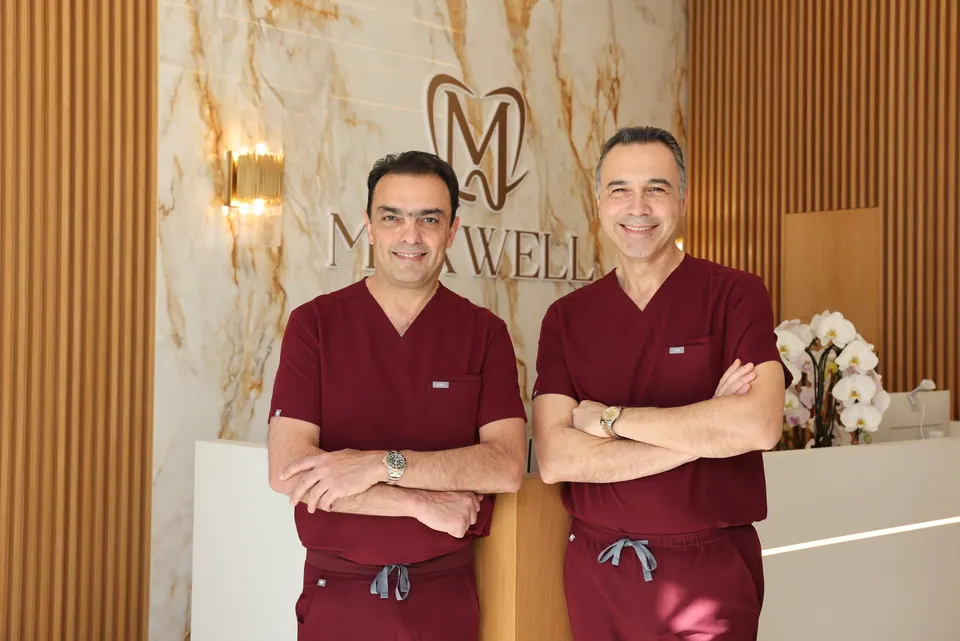
Two general dentists in North York
Dr. Ali Ellioun has more than 30 years of clinical experience, with particular interests in restorative dentistry, root canal treatment, oral surgery, prosthodontics and implants. Dr. Shahyar Ameryoun has over 25 years of experience in root canal therapy, crowns and bridges, restorative and preventive care, cosmetic dentistry, extractions and emergency care. Both are registered with the Royal College of Dental Surgeons of Ontario.
Maxwell Dental is at 716 Sheppard Ave West, at street level with free parking. We are open Monday to Friday from 10 am to 6 pm and Saturday from 9 am to 4 pm, and the team works in English, Farsi and Tagalog. Your first visit is an exam with any X-rays your dentist recommends, followed by a plan and costs before anything is started.
Wilson Heights · Clanton Park · Bathurst Manor · Lansing–Westgate · Armour Heights · Westminster–Branson · Yonge and Sheppard
- Types of dental crowns→
- Cleaning and caring for a night guard→
- Denture adhesive and cleaning dentures→
- Types of dental X-rays→
- All patient guides→
This page gives general information and does not replace advice from your dentist. Program rules change; we check your coverage before treatment.
Last updated: November 24, 2026