
Teeth whitening for sensitive teeth
In short: people with sensitive teeth can usually still whiten, with a gentler plan: a check-up first to treat exposed roots, decay or leaking fillings; a desensitising toothpaste for two weeks beforehand; a lower-strength gel in custom trays; and shorter or less frequent sessions. Sensitivity from whitening is temporary and settles within a day or two of stopping.
Why whitening causes sensitivity
What is going on:
- Peroxide passes through enamel to the dentine beneath, which irritates the nerve for a short time
- Exposed roots and worn enamel let it through faster
- Cracks, decay and leaking fillings give it a direct path
- Gel on the gums causes soreness, which is often mistaken for tooth sensitivity
- Stronger gel and longer sessions increase the effect
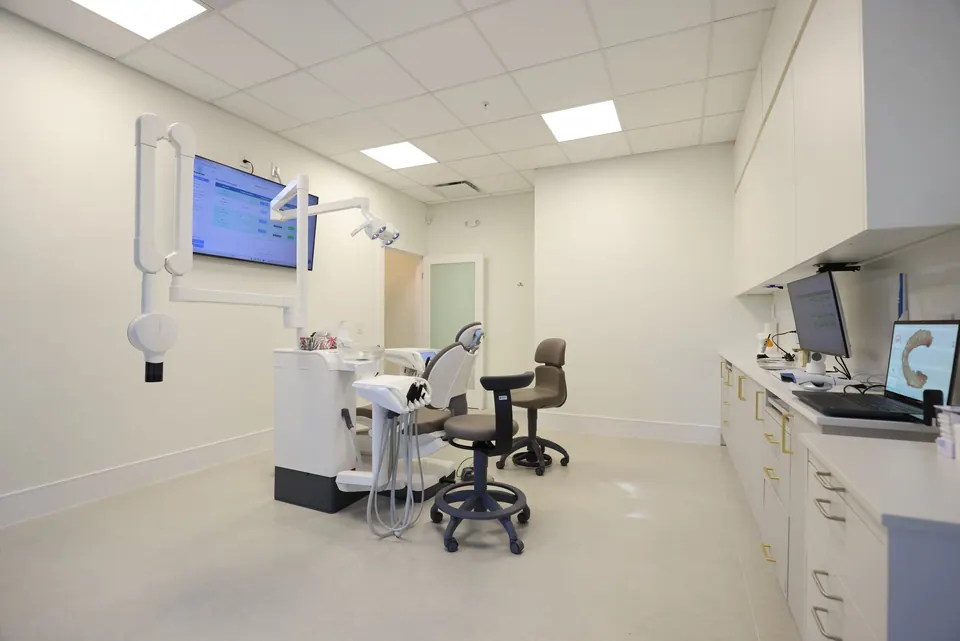
A gentler way to whiten
- 1
Find the cause
An exam finds recession, decay, cracks or wear. These are treated or protected first.
- 2
Prepare
Use a desensitising toothpaste twice a day for two weeks before you begin.
- 3
Choose the method
Custom trays with a lower-strength gel give the most control. The gel stays off the gums.
- 4
Go slowly
Shorter sessions, or every second day. A slower course reaches the same shade.
- 5
Pause when needed
Stop for a day or two if teeth twinge, then continue.
In-office whitening with sensitive teeth
A single clinic session uses stronger gel and gives a faster change, with more chance of short, sharp twinges in the first day. It is still possible for many sensitive patients: the gums and any exposed roots are covered, the session can be shortened, and a desensitising agent can be applied. Your dentist will advise whether trays, a clinic session or a combination suits you.
When not to whiten yet
Do not whiten over untreated decay, a cracked tooth or gum disease. Whitening is not advised during pregnancy. If sensitivity is severe or lasts more than a few days after stopping, have the teeth checked: the cause is usually something that needs treating rather than the whitening itself.
What best describes your teeth?
Bring your questions. Your dentist will go through what applies to you at an exam.
Practical tips
- Use a sensitivity toothpaste for two weeks first
- Do not overfill trays
- Skip a day if teeth twinge
- Avoid very cold drinks during the course
What happens when you come in
- 1
You tell us what is wrong
Send the form or call during opening hours. Urgent problems are fitted in around booked appointments, and we tell you the earliest time we can see you.
- 2
Examination
Your dentist looks at the area, tests the tooth or gum gently and takes only the X-rays needed to find the cause. You are shown what was found.
- 3
Options and costs
You hear the options, including the simplest one, how many visits each takes and what each costs. Nothing is started until you agree.
- 4
Treatment and follow-up
Pain is dealt with first. Anything that needs a second visit is booked before you leave, with written aftercare in English, and explained in Farsi or Tagalog if you prefer.
How dental fees are set in Ontario
Dental care in Ontario is not covered by OHIP for most adults, so treatment is paid for by an insurance plan, a government program such as the Canadian Dental Care Plan, or the patient. Each dental office sets its own fees. Most refer to the suggested fee guide published each year by the Ontario Dental Association, which lists a code and a suggested fee for every procedure.
Insurance plans and the Canadian Dental Care Plan each pay according to their own fee schedules, which can be lower than a clinic's fee. The difference, plus any percentage your plan does not cover, is the part you pay. That is why two people having the same treatment can pay different amounts.
Know the cost first
After an exam, your dentist can give you an estimate listing each procedure. For larger treatment we can send it to your insurer as a predetermination, so you see what the plan will pay before you start.
Ask for an estimateKeeping problems from coming back
Most dental problems start small and silently. Brushing twice a day with fluoride toothpaste, cleaning between the teeth once a day and keeping sugary or acidic food and drink to mealtimes prevent the majority of decay and gum disease.
Regular exams find the rest early. A check-up every six months, or at the interval your dentist advises, includes a look at every tooth, the gums and the soft tissues, and X-rays when they are due. A small problem found at an exam is nearly always simpler and less costly to treat than the same problem found because it hurts.
If you have not seen a dentist for some time, you are welcome here without judgement. Tell us what worries you, whether that is cost, time or fear, and we will plan around it. Canadian Dental Care Plan patients are welcome and insurers are billed directly.
Habits that protect teeth
- Soft brush, two minutes, twice a day
- Floss or interdental brushes daily
- Water between meals
- A night guard if you grind; a mouthguard for contact sports
- No smoking or vaping
Three ways patients pay
CDCP
- Bring
- Your CDCP card and photo ID
- We do
- Check what the plan covers before treatment and tell you about any amount you would pay
Work or private insurance
- Bring
- Your plan and member number
- We do
- Bill your insurer directly, so you pay only the part your plan doesn't cover
No insurance
- Ask
- For a cost estimate before treatment starts
- Pay
- All common payment methods are accepted
Questions about teeth whitening for sensitive teeth
Usually, with a check-up first and a gentler method.
Custom trays with a lower-strength gel, used at your own pace.
A day or two after stopping, for most people.
Some are made at lower strength. Custom trays keep gel off the gums and are easier to control.
Not when used as directed on healthy teeth.
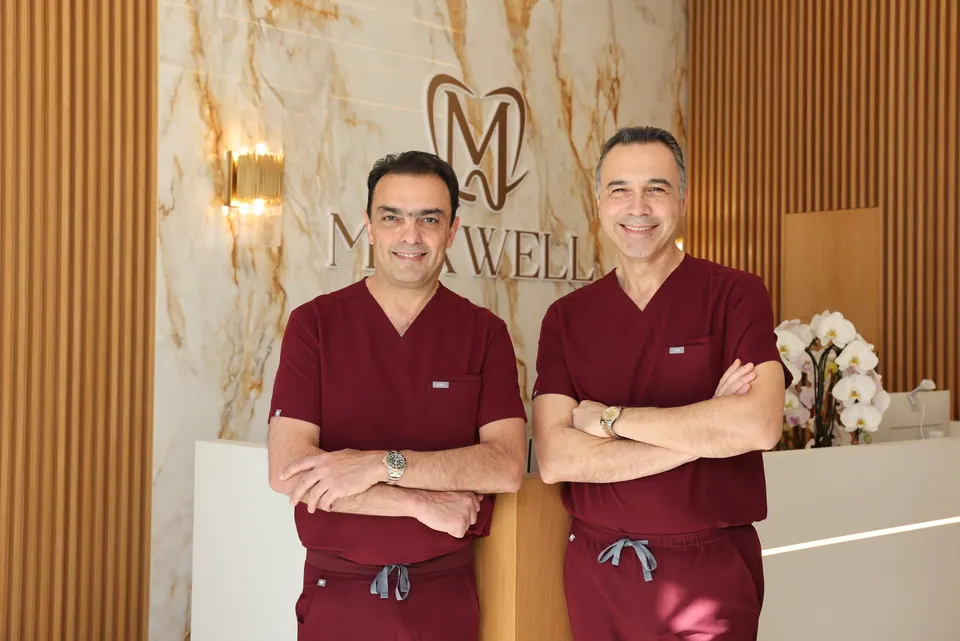
Two general dentists in North York
Dr. Ali Ellioun has more than 30 years of clinical experience, with particular interests in restorative dentistry, root canal treatment, oral surgery, prosthodontics and implants. Dr. Shahyar Ameryoun has over 25 years of experience in root canal therapy, crowns and bridges, restorative and preventive care, cosmetic dentistry, extractions and emergency care. Both are registered with the Royal College of Dental Surgeons of Ontario.
Maxwell Dental is at 716 Sheppard Ave West, at street level with free parking. We are open Monday to Friday from 10 am to 6 pm and Saturday from 9 am to 4 pm, and the team works in English, Farsi and Tagalog. Your first visit is an exam with any X-rays your dentist recommends, followed by a plan and costs before anything is started.
Wilson Heights · Clanton Park · Bathurst Manor · Lansing–Westgate · Armour Heights · Westminster–Branson · Yonge and Sheppard
- Orthodontist or general dentist?→
- Periodontist or general dentist?→
- Endodontist or general dentist?→
- Prosthodontist or general dentist?→
- All patient guides→
This page gives general information and does not replace advice from your dentist. Program rules change; we check your coverage before treatment.
Last updated: November 24, 2026