
Digital X-rays and oral screenings in North York
In short: digital X-rays show the parts of your teeth and jaw that can't be seen by eye, using less radiation than film. An oral screening is a careful look at your lips, tongue, cheeks and throat for changes that should be checked.
Digital X-rays and oral screenings, explained
Much of a tooth is hidden: the roots, the bone that holds them, and the surfaces where two teeth touch. Digital X-rays let your dentist see decay between teeth, infection at a root tip, bone loss from gum disease, and teeth that haven't come through. The image appears on a screen in seconds and can be enlarged so you can see it too.
An oral screening is a careful look and feel of the lips, cheeks, tongue, floor of the mouth, palate and throat. Most patches and lumps are harmless, but a dentist is often the first person to notice a change that should be checked further.
Is digital X-rays and oral screenings right for you?
One tick is enough to ask. Your dentist will confirm what you need.
Who it suits
New patients usually need a set of X-rays as a baseline. After that, how often depends on your risk of decay and gum disease, not a fixed timetable. Screening is part of every exam and matters most for adults who smoke or drink alcohol regularly, or who have a sore that hasn't healed.
What you gain
- Finds decay and infection that can't be seen by eye
- Lower radiation than film X-rays
- Images are stored and compared over time
- Soft-tissue changes are noticed early
Step by step
- 1
Positioning
A small sensor or the panoramic unit is positioned.
- 2
Image
The image appears on screen within seconds.
- 3
Review
Your dentist shows you what the image means.
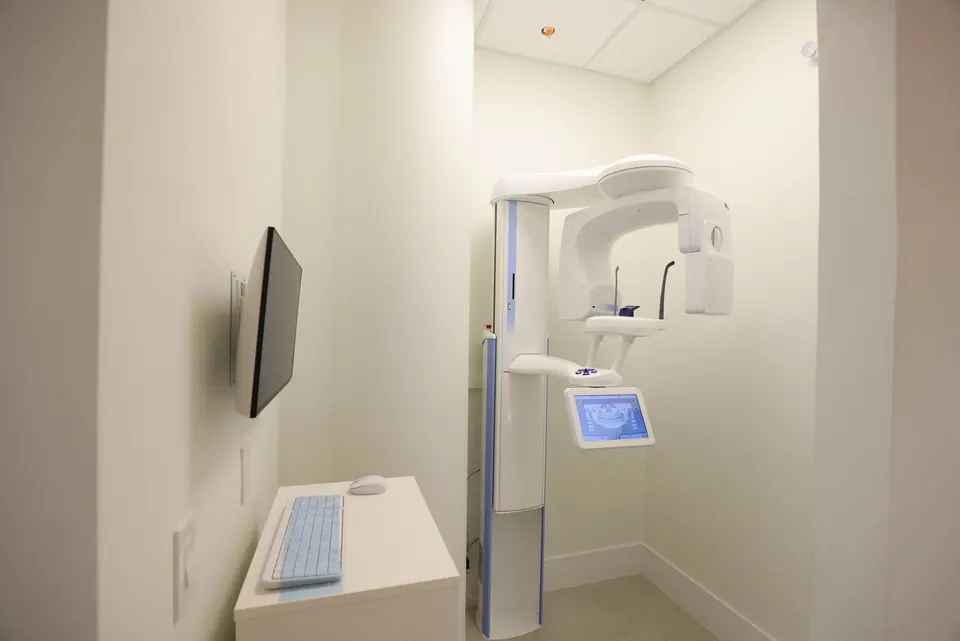
Maxwell Dental has a dedicated panoramic X-ray room. A panoramic image shows both jaws, all the teeth, the jaw joints and the sinuses in one picture, which helps when planning wisdom tooth removal, implants or dentures. Small intraoral images show individual teeth in fine detail.
What it feels like
No numbing needed. If you are nervous, say so when you book. Your dentist explains each step before it happens, agrees a signal you can use to pause, and goes at your pace.
- Care in English, فارسی or Tagalog
- Questions welcome at every step
- Ask about sedation if anxiety keeps you away
Afterwards
There is nothing to do afterwards. If an image or the screening shows something that needs attention, your dentist explains it and the next step, which may be simply watching the area and checking it again at your next visit.
Do
- Tell us if you might be pregnant
- Ask to see your images
- Mention any mouth sores
Don't
- Worry about routine X-rays; exposure is low
- Ignore a sore that lasts two weeks
- Skip screening if you smoke
Call us if a mouth sore, lump or patch lasts longer than two weeks.
Checking your own mouth
Between visits, look inside your mouth in good light once a month. Check the sides and underside of your tongue, the insides of your cheeks and lips, the roof and floor of your mouth and your gums. You are looking for a red or white patch, a lump, a sore that hasn't healed in two weeks, or numbness. Most findings turn out to be harmless, but anything that persists should be seen. Tell your dentist if you smoke, vape or chew tobacco, because it changes what we look for.
Three useful questions
- Which X-rays do I need and why?
- When were my last ones taken?
- Is there anything you want to watch?
Alternatives to digital X-rays and oral screenings
Without X-rays, decay between teeth and problems under the gum are usually found only when they cause pain. If you've had recent X-rays elsewhere, ask that clinic to send them to us so they aren't repeated unnecessarily.
What you pay
Fees depend on the number and type of images. Plans generally cover routine X-rays at set intervals and panoramic images less often. We confirm your coverage first and take only the images your dentist recommends.
CDCP
- Bring
- Your CDCP card and photo ID
- We do
- Check what the plan covers before treatment and tell you about any amount you would pay
Work or private insurance
- Bring
- Your plan and member number
- We do
- Bill your insurer directly, so you pay only the part your plan doesn't cover
No insurance
- Ask
- For a cost estimate before treatment starts
- Pay
- All common payment methods are accepted
Questions about digital X-rays and oral screenings
Digital X-rays use a low dose, and we take them only when they are needed.
One image of all your teeth and both jaws, taken while you stand still for a few seconds.
Very little. Digital sensors need a small dose, and we use shielding and take only the images that are needed.
Tell us if you are or might be pregnant. Routine X-rays are usually postponed; urgent ones can be taken with precautions if your dentist advises it.
Often we re-check it in about two weeks. If it is still there, your dentist will refer you for further assessment.
Sometimes, to check for decay between teeth and how adult teeth are developing. We take as few as possible.
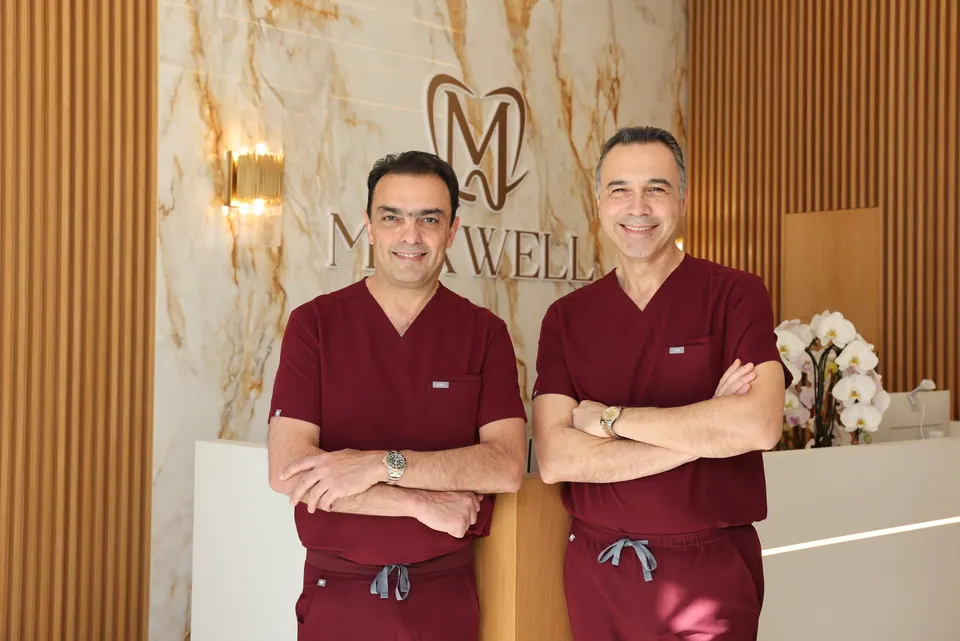
Two general dentists
Dr. Ali Ellioun has more than 30 years of clinical experience. He enjoys all aspects of general dentistry, with particular interests in restorative dentistry, root canal treatment, oral surgery, prosthodontics and implants.
Dr. Shahyar Ameryoun has over 25 years of experience in root canal therapy, crowns and bridges, restorative and preventive care, cosmetic dentistry, extractions and emergency care.
Both are registered with the Royal College of Dental Surgeons of Ontario and take the time to explain your options before treatment starts.
Coming to Maxwell Dental
Maxwell Dental is at 716 Sheppard Ave West in North York, at street level, with free parking on site. We are open Monday to Friday from 10 am to 6 pm and Saturday from 9 am to 4 pm. The team works in English, Farsi and Tagalog, so tell us which you prefer when you book.
If you are in pain, call (647) 479-4842 and we will tell you the earliest time we can see you.
Your first visit follows four steps: you request a time by phone or the form, complete your registration, have an exam with any X-rays your dentist recommends, and then hear your plan and costs before anything is started. Insurers are billed directly, CDCP patients are welcome, and you can ask for a cost estimate at any point.
Before your appointment
- Bring photo ID and your CDCP or insurance card if you have one
- Bring a list of the medicines you take
- New patients complete a short registration form; ask for it in advance if you like
- Tell us about any health changes since your last visit
Wilson Heights · Clanton Park · Bathurst Manor · Lansing–Westgate · Armour Heights · Westminster–Branson · Yonge and Sheppard
This page gives general information about digital X-rays and oral screenings and does not replace an examination. Your dentist will advise what is right for your mouth and health.
Last updated: November 24, 2026