
Root-end surgery in North York
In short: root-end surgery, also called an apicoectomy, treats an infection that persists at the tip of a root after root canal treatment. The tip and infected tissue are removed through the gum and the end of the root is sealed.
Root-end surgery, explained
Most root canal treatments heal without further trouble. Occasionally infection persists at the very tip of a root, in tiny side branches that instruments can't reach or around a canal that is blocked. When re-treating through the top of the tooth isn't possible or hasn't worked, the root tip can be reached directly through the gum.
In root-end surgery the gum is gently lifted, the infected tissue and the last few millimetres of the root are removed, and a small filling seals the end of the canal. The gum is stitched back and bone heals into the area over the following months.
Is root-end surgery right for you?
One tick is enough to ask. Your dentist will confirm what you need.
Who it suits
It is considered for a tooth that has had root canal treatment, is otherwise sound and restorable, but still shows infection at the root tip. It is done most often on front teeth and premolars. Molars, and roots close to nerves or sinuses, are usually referred to a certified specialist in endodontics or oral surgery.
What you gain
- A chance to keep a tooth that would otherwise be removed
- Treats infection at its source
- Leaves an existing crown or post undisturbed
- Done under local anaesthetic
Step by step
- 1
Assess
X-rays or a scan.
- 2
Surgery
The root tip is removed and sealed.
- 3
Heal
Stitches come out in about a week.
An X-ray or scan shows the size of the infection and the shape of the root. On the day the area is numbed, and the procedure typically takes under an hour and a half. You are given written instructions and a review appointment.
What it feels like
Numbed. If you are nervous, say so when you book. Your dentist explains each step before it happens, agrees a signal you can use to pause, and goes at your pace.
- Care in English, فارسی or Tagalog
- Questions welcome at every step
- Ask about sedation if anxiety keeps you away
Afterwards
Swelling and bruising of the gum or lip are common for a few days. Use cold packs on the first day, eat soft foods and keep the lip still so the stitches aren't disturbed. Stitches come out in about a week.
Do
- Use cold packs
- Eat soft foods
- Keep the area clean as shown
Don't
- Lift your lip to look at the stitches
- Smoke
- Brush the area hard
Call us if swelling or pain increases after day three.
Deciding between re-treatment, surgery and extraction
When a root-filled tooth becomes troublesome again there are three paths. Re-treatment reopens the tooth, removes the old root filling and cleans the canals again; it is usually the first choice when the canals can be reached. Root-end surgery approaches from the root tip and is chosen when a post, a well-fitting crown or a blockage makes re-treatment risky, or when re-treatment has already been tried. Extraction is considered when the tooth is cracked, has too little structure left or the outlook is poor. Your dentist will explain which applies to your tooth and may suggest a specialist opinion.
Three useful questions
- Is re-treatment possible first?
- What is the outlook for this tooth?
- Would you do this here or refer me?
Alternatives to root-end surgery
Repeating the root canal treatment through the crown is usually tried first when it is feasible. The other option is extraction, followed by an implant, bridge or denture.
What you pay
Fees depend on the tooth and complexity. Coverage varies between plans and may need pre-authorization. We check before booking and tell you if a referral would be billed separately by the specialist.
CDCP
- Bring
- Your CDCP card and photo ID
- We do
- Check what the plan covers before treatment and tell you about any amount you would pay
Work or private insurance
- Bring
- Your plan and member number
- We do
- Bill your insurer directly, so you pay only the part your plan doesn't cover
No insurance
- Ask
- For a cost estimate before treatment starts
- Pay
- All common payment methods are accepted
Questions about root-end surgery
Your dentist will tell you whether it can be done here or is best referred to a specialist.
Many teeth heal well, but it depends on the tooth and the infection. Your dentist will give you an honest outlook for yours.
The gum usually heals with little or no visible mark.
Most people manage with ordinary pain relief for a few days.
Symptoms settle, and follow-up X-rays over the next year show bone healing.
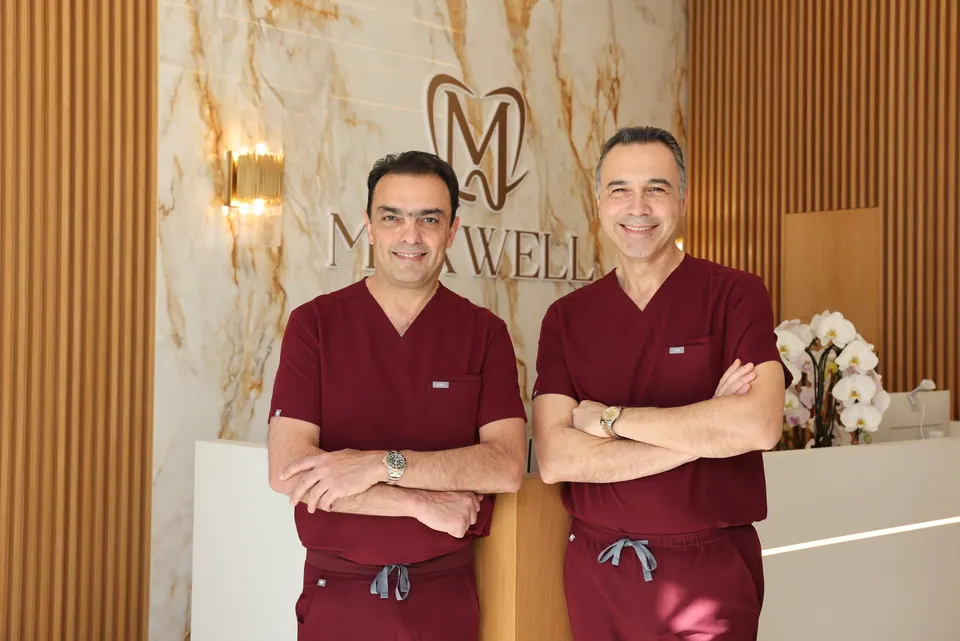
Two general dentists
Dr. Ali Ellioun has more than 30 years of clinical experience. He enjoys all aspects of general dentistry, with particular interests in restorative dentistry, root canal treatment, oral surgery, prosthodontics and implants.
Dr. Shahyar Ameryoun has over 25 years of experience in root canal therapy, crowns and bridges, restorative and preventive care, cosmetic dentistry, extractions and emergency care.
Both are registered with the Royal College of Dental Surgeons of Ontario and take the time to explain your options before treatment starts.
Coming to Maxwell Dental
Maxwell Dental is at 716 Sheppard Ave West in North York, at street level, with free parking on site. We are open Monday to Friday from 10 am to 6 pm and Saturday from 9 am to 4 pm. The team works in English, Farsi and Tagalog, so tell us which you prefer when you book.
If you are in pain, call (647) 479-4842 and we will tell you the earliest time we can see you.
Your first visit follows four steps: you request a time by phone or the form, complete your registration, have an exam with any X-rays your dentist recommends, and then hear your plan and costs before anything is started. Insurers are billed directly, CDCP patients are welcome, and you can ask for a cost estimate at any point.
Before your appointment
- Bring photo ID and your CDCP or insurance card if you have one
- Bring a list of the medicines you take
- New patients complete a short registration form; ask for it in advance if you like
- Tell us about any health changes since your last visit
Wilson Heights · Clanton Park · Bathurst Manor · Lansing–Westgate · Armour Heights · Westminster–Branson · Yonge and Sheppard
This page gives general information about root-end surgery and does not replace an examination. Your dentist will advise what is right for your mouth and health.
Last updated: November 24, 2026