
Dental crowns in North York
In short: a crown is a custom cap that covers a damaged or weakened tooth to restore its shape, strength and appearance. Crowns are used after large fillings, cracks or root canal treatment, and on top of dental implants.
Dental crowns, explained
A tooth that has lost a lot of its structure to decay, a large filling, a crack or root canal treatment can split under chewing forces. A crown covers the whole visible part of the tooth like a helmet, holding it together and restoring its shape and bite.
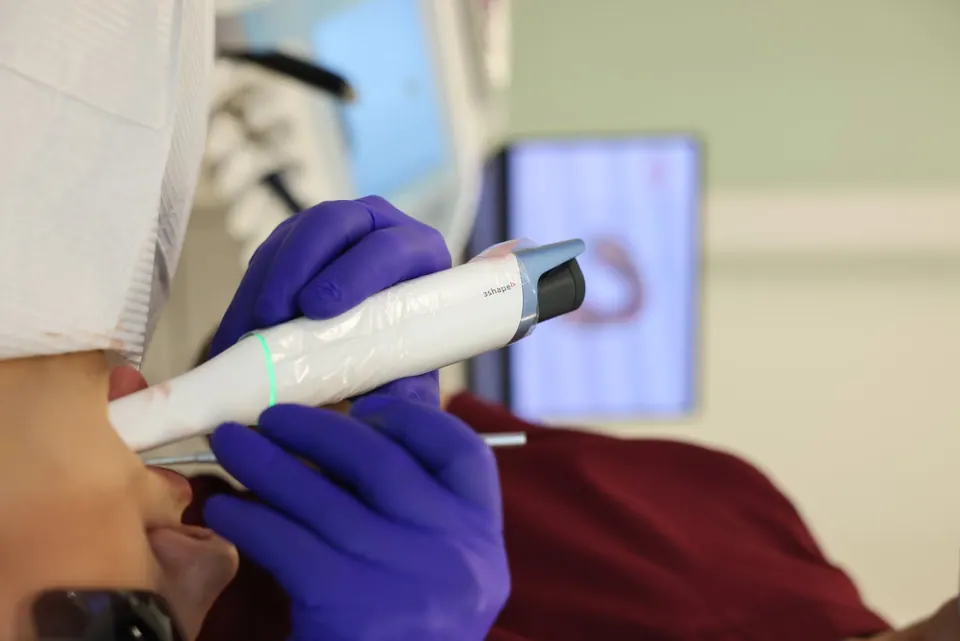
Crowns are made from tooth-coloured ceramic, zirconia, or porcelain bonded to metal. Your dentist recommends a material based on where the tooth is, how hard you bite and how it will look. A digital scan records the prepared tooth so the crown can be made to fit precisely.
Is dental crowns right for you?
One tick is enough to ask. Your dentist will confirm what you need.
Who it suits
Crowns suit cracked teeth, teeth with very large fillings, back teeth after root canal treatment, badly worn or misshapen teeth, and implants. If enough healthy tooth remains, a smaller onlay may be suggested. If the tooth is cracked below the bone or too broken to hold a crown, extraction may be the only option.
What you gain
- Protects a weak tooth from splitting
- Restores full chewing strength
- Shaped and shaded to match your teeth
- Long-lasting with normal care
Step by step
- 1
Prepare
The tooth is numbed and shaped.
- 2
Scan
A digital scan or impression is taken and a temporary crown placed.
- 3
Fit
Your crown is checked for fit and colour, then fixed in place.
Between visits you wear a temporary crown held with soft cement. It protects the tooth but is not as strong as the final one. At the fitting, your dentist checks the edges, the contacts with neighbouring teeth, the bite and the colour before cementing the crown permanently.
What it feels like
Numbed. If you are nervous, say so when you book. Your dentist explains each step before it happens, agrees a signal you can use to pause, and goes at your pace.
- Care in English, فارسی or Tagalog
- Questions welcome at every step
- Ask about sedation if anxiety keeps you away
Afterwards
Mild sensitivity and gum tenderness around the tooth are normal for a few days. A crowned tooth can still decay at the edge where crown meets tooth, so brush along the gumline and clean between the teeth daily.
Do
- Chew on the other side with a temporary crown
- Clean around the crown daily
- Wear a night guard if you grind
Don't
- Chew ice or very hard foods
- Pull floss up sharply on a temporary crown
- Ignore a loose crown
Call us if a crown feels loose, high or comes off.
Questions worth asking before a crown
A crown is a long-term decision, so it helps to understand the choices. Ask which material is suggested and why: zirconia and ceramic look natural, while some back teeth benefit from stronger options. Ask whether the tooth needs a build-up or root canal treatment first, how long the temporary will be in place, and what happens if the tooth is sensitive afterwards. If you clench or grind, mention it, because it affects the choice of material and whether a night guard is advised.
Three useful questions
- Which material do you recommend for this tooth?
- Is an onlay possible instead?
- What will my plan cover?
Alternatives to dental crowns
A large filling costs less but may not protect a weakened tooth. An onlay keeps more natural tooth when damage is moderate. Removing the tooth and replacing it with an implant or bridge is a last resort when the tooth can't be restored.
What you pay
Cost depends on the material and whether a post or build-up is needed first. Crowns are a major service: insurance plans often cover a percentage up to a yearly limit, and the CDCP covers crowns in defined situations, sometimes with pre-authorization. We check before treatment.
CDCP
- Bring
- Your CDCP card and photo ID
- We do
- Check what the plan covers before treatment and tell you about any amount you would pay
Work or private insurance
- Bring
- Your plan and member number
- We do
- Bill your insurer directly, so you pay only the part your plan doesn't cover
No insurance
- Ask
- For a cost estimate before treatment starts
- Pay
- All common payment methods are accepted
Questions about dental crowns
Often ten years or more with good care.
Yes, the shade is chosen to match.
The tooth is numbed for the preparation. Afterwards you may have mild tenderness for a few days.
Keep it, call us, and avoid chewing on that side. We'll re-cement it.
Yes, at the margin. Good cleaning and check-ups prevent it.
Brush and floss as for natural teeth, and wear a night guard if you grind.
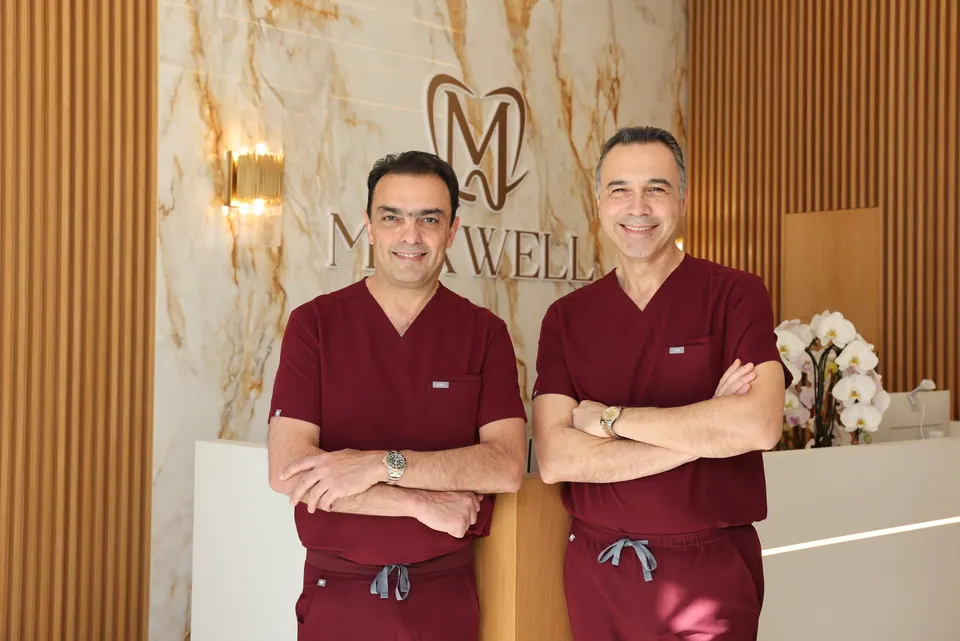
Two general dentists
Dr. Ali Ellioun has more than 30 years of clinical experience. He enjoys all aspects of general dentistry, with particular interests in restorative dentistry, root canal treatment, oral surgery, prosthodontics and implants.
Dr. Shahyar Ameryoun has over 25 years of experience in root canal therapy, crowns and bridges, restorative and preventive care, cosmetic dentistry, extractions and emergency care.
Both are registered with the Royal College of Dental Surgeons of Ontario and take the time to explain your options before treatment starts.
Coming to Maxwell Dental
Maxwell Dental is at 716 Sheppard Ave West in North York, at street level, with free parking on site. We are open Monday to Friday from 10 am to 6 pm and Saturday from 9 am to 4 pm. The team works in English, Farsi and Tagalog, so tell us which you prefer when you book.
If you are in pain, call (647) 479-4842 and we will tell you the earliest time we can see you.
Your first visit follows four steps: you request a time by phone or the form, complete your registration, have an exam with any X-rays your dentist recommends, and then hear your plan and costs before anything is started. Insurers are billed directly, CDCP patients are welcome, and you can ask for a cost estimate at any point.
Before your appointment
- Bring photo ID and your CDCP or insurance card if you have one
- Bring a list of the medicines you take
- New patients complete a short registration form; ask for it in advance if you like
- Tell us about any health changes since your last visit
Wilson Heights · Clanton Park · Bathurst Manor · Lansing–Westgate · Armour Heights · Westminster–Branson · Yonge and Sheppard
This page gives general information about dental crowns and does not replace an examination. Your dentist will advise what is right for your mouth and health.
Last updated: November 24, 2026