
Oral cancer screening in North York
In short: an oral cancer screening is a short visual and physical check of the lips, tongue, cheeks, gums, palate, throat and neck for patches, lumps or sores that should not be there. It is part of a regular dental exam and takes a few minutes.
Oral cancer screening, explained
Cancers of the mouth and throat are easier to treat when found early, and early changes are usually painless. That is why your dentist looks beyond your teeth at every exam: at the sides and underside of the tongue, the floor of the mouth, the cheeks, the palate and the back of the throat, and feels under the jaw and along the neck.
The screening is listed with digital X-rays and oral screenings among Maxwell Dental's general services. Your dentist is looking for red or white patches, ulcers that have not healed, thickened areas and lumps, and compares what is seen with your previous visits.
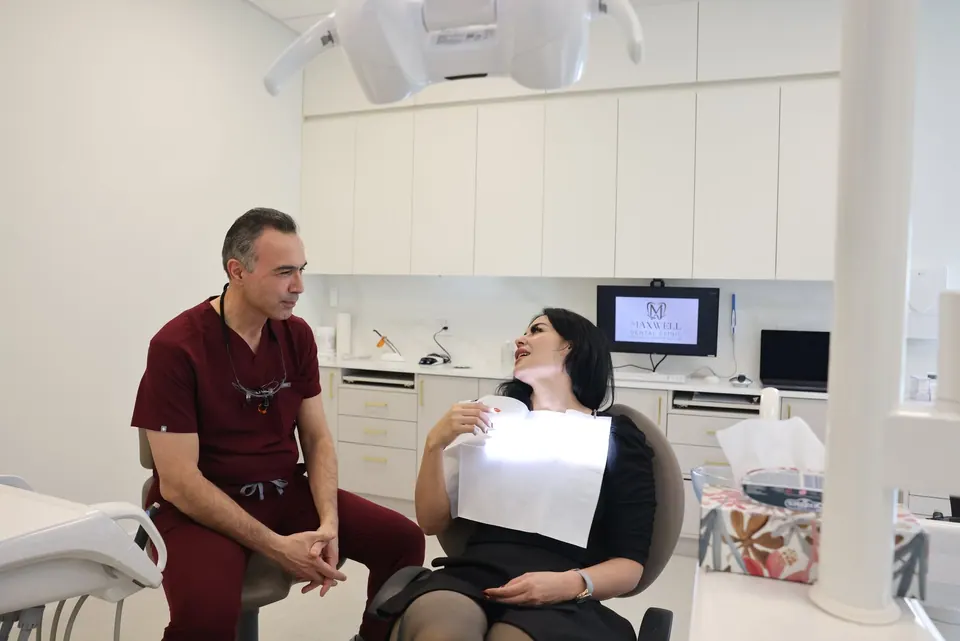
Is an oral cancer screening right for you?
One tick is enough to ask. Your dentist will confirm what you need.
Who it suits
Everyone benefits, and it matters most for adults who smoke or chew tobacco, drink alcohol regularly, have had a lot of sun on the lips, or have had a mouth cancer before. Human papillomavirus is linked with some throat cancers, so people without the classic risks are checked too. Denture wearers still need a yearly mouth exam.
What you gain
- Takes only a few minutes
- Painless: looking and gentle pressing
- Finds changes before they cause symptoms
- Included in your regular exam
Step by step
- 1
Ask
Your dentist asks about symptoms, habits and health.
- 2
Look
The lips, tongue, cheeks, palate and throat are examined.
- 3
Feel
The neck, jaw and floor of the mouth are checked for lumps.
- 4
Advise
Anything unusual is recorded, reviewed or referred.
Most things found are harmless: a bitten cheek, a rubbed spot from a denture, a burn from hot food. The usual approach is to remove any obvious cause and look again in two weeks. A change that is still there is referred to a specialist, who decides whether a small sample of tissue is needed.
What it feels like
Painless. If you are nervous, say so when you book. Your dentist explains each step before it happens, agrees a signal you can use to pause, and goes at your pace.
- Care in English, فارسی or Tagalog
- Questions welcome at every step
- Ask about sedation if anxiety keeps you away
Afterwards
There is nothing to recover from. If your dentist asks to see you again in two weeks, please keep the appointment even if the area feels fine. Between visits, look in the mirror now and then and tell us about anything that has not healed.
Do
- Mention any sore, lump or numb area
- Take dentures out for the check
- Come back for a review if asked
Don't
- Wait for a sore to hurt before asking
- Assume a painless patch is harmless
- Skip exams because you have dentures
Call us if a sore, lump or patch lasts longer than two weeks.
Checking your own mouth
Once a month, in good light, look at your lips, gums and the inside of your cheeks. Stick out your tongue and look at the top, both sides and underneath. Tilt your head back to see the roof of your mouth. Feel along your jaw and neck for lumps. You are looking for anything new that lasts more than two weeks: a sore, a red or white patch, a thickening or numbness. Most changes are harmless, but they should be looked at.
Three useful questions
- Is everything normal today?
- Does anything need a review in two weeks?
- How does my risk compare with average?
Alternatives to oral cancer screening
There is no home test that replaces an examination. A family doctor can also examine the mouth and neck. Special lights and dyes exist as aids, but a careful visual and physical check by a clinician remains the standard first step.
What you pay
The screening is part of a dental exam, so there is normally no separate fee. Exams are covered by most insurance plans and by the Canadian Dental Care Plan.
CDCP
- Bring
- Your CDCP card and photo ID
- We do
- Check what the plan covers before treatment and tell you about any amount you would pay
Work or private insurance
- Bring
- Your plan and member number
- We do
- Bill your insurer directly, so you pay only the part your plan doesn't cover
No insurance
- Ask
- For a cost estimate before treatment starts
- Pay
- All common payment methods are accepted
Questions about oral cancer screening
No. It involves looking and gentle pressing only.
Most findings are harmless. Anything doubtful is reviewed in two weeks or referred for assessment.
A sore that does not heal in two weeks, a red or white patch, a lump, numbness, or trouble swallowing.
Yes. Risk is lower, not zero.
At each regular exam, and sooner if you notice a change.
Only if a change persists, and that is decided by the specialist you are referred to.
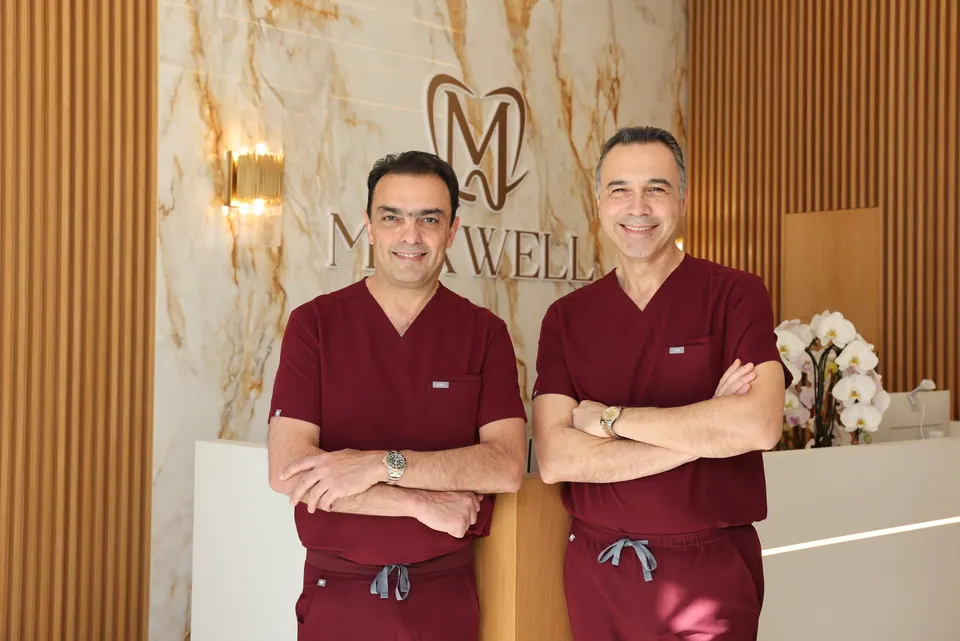
Two general dentists
Dr. Ali Ellioun has more than 30 years of clinical experience. He enjoys all aspects of general dentistry, with particular interests in restorative dentistry, root canal treatment, oral surgery, prosthodontics and implants.
Dr. Shahyar Ameryoun has over 25 years of experience in root canal therapy, crowns and bridges, restorative and preventive care, cosmetic dentistry, extractions and emergency care.
Both are registered with the Royal College of Dental Surgeons of Ontario and take the time to explain your options before treatment starts.
Coming to Maxwell Dental
Maxwell Dental is at 716 Sheppard Ave West in North York, at street level, with free parking on site. We are open Monday to Friday from 10 am to 6 pm and Saturday from 9 am to 4 pm. The team works in English, Farsi and Tagalog, so tell us which you prefer when you book.
If you are in pain, call (647) 479-4842 and we will tell you the earliest time we can see you.
Your first visit follows four steps: you request a time by phone or the form, complete your registration, have an exam with any X-rays your dentist recommends, and then hear your plan and costs before anything is started. Insurers are billed directly, CDCP patients are welcome, and you can ask for a cost estimate at any point.
Before your appointment
- Bring photo ID and your CDCP or insurance card if you have one
- Bring a list of the medicines you take
- New patients complete a short registration form; ask for it in advance if you like
- Tell us about any health changes since your last visit
Wilson Heights · Clanton Park · Bathurst Manor · Lansing–Westgate · Armour Heights · Westminster–Branson · Yonge and Sheppard
This page gives general information about oral cancer screening and does not replace an examination. Your dentist will advise what is right for your mouth and health.
Last updated: November 24, 2026