
Smile makeovers in North York
In short: a smile makeover is a plan that combines treatments such as whitening, bonding, veneers, crowns or aligners to reach the smile you want. It starts with a conversation, photos and a scan, and is staged to suit your budget.
Smile makeovers, explained
Most people who dislike their smile can name several things at once: the colour, a chipped edge, a gap, an old dark filling, teeth that have worn short. A smile makeover looks at these together and sequences the right treatments, instead of fixing one thing and discovering it no longer matches the rest.
The plan is yours. Your dentist listens to what you want, examines your teeth and gums, records photos and a scan, and then sets out options from the simplest to the most comprehensive, with costs for each.
Is smile makeovers right for you?
One tick is enough to ask. Your dentist will confirm what you need.
Who it suits
A makeover suits adults whose teeth and gums are healthy or can be made healthy first. Decay, gum disease and bite problems are treated before cosmetic work so the result lasts. People with a deadline such as a wedding should start months ahead.
What you gain
- One coordinated plan instead of piecemeal fixes
- Options at different budgets
- Health problems dealt with first
- Stages can be spread over time
Step by step
- 1
Listen
You tell us what you'd like to change.
- 2
Record
Photos and a scan.
- 3
Plan
Options, order and costs explained.
- 4
Treat
Step by step.
A typical sequence is: gum care and any fillings; alignment with clear aligners if needed; whitening; then bonding, veneers or crowns matched to the new shade. Not everyone needs every step. Some makeovers are simply whitening and two bonded edges.
What it feels like
Depends on the treatments. If you are nervous, say so when you book. Your dentist explains each step before it happens, agrees a signal you can use to pause, and goes at your pace.
- Care in English, فارسی or Tagalog
- Questions welcome at every step
- Ask about sedation if anxiety keeps you away
Afterwards
Your dentist explains how to protect the result: a night guard if you grind, regular cleanings, and top-up whitening.
Do
- Bring photos of smiles you like
- Ask to see the plan
- Finish any gum or decay treatment first
Don't
- Rush decisions
- Whiten after veneers; do it before
- Skip maintenance
Call us if anything about the plan is unclear.
Setting priorities and a budget
A good plan separates what your teeth need from what you would like. Health comes first: decay, gum disease and broken teeth. Next are changes that give the most visible improvement for the least intervention, often whitening, replacing an old discoloured filling or bonding a chipped edge. Larger steps such as aligners, veneers or crowns come last and only if you still want them. Ask your dentist to mark each item as needed, recommended or optional, with a fee beside it. You can then stage treatment over months or years, and stop whenever you are happy with the result. Many people are satisfied after the first, simplest stage.
Three useful questions
- What would you do first?
- What does each stage cost?
- Which results are reversible and which are not?
Alternatives to smile makeovers
You can choose a single treatment instead of a full plan. Your dentist will tell you honestly what one step alone will and won't achieve.
What you pay
Cosmetic treatment is generally not covered by insurance or the CDCP, though parts that restore damaged teeth may be. You receive a staged estimate so you can decide what to do and when.
CDCP
- Bring
- Your CDCP card and photo ID
- We do
- Check what the plan covers before treatment and tell you about any amount you would pay
Work or private insurance
- Bring
- Your plan and member number
- We do
- Bill your insurer directly, so you pay only the part your plan doesn't cover
No insurance
- Ask
- For a cost estimate before treatment starts
- Pay
- All common payment methods are accepted
Questions about smile makeovers
It depends on the treatments chosen. You get a written estimate before anything starts.
From one visit to many months, depending on what is involved.
Planning tools and mock-ups can give a preview for many treatments. Ask your dentist.
That's fine. The plan is built around what you want.
Most cosmetic procedures involve little discomfort; numbing is used where needed.
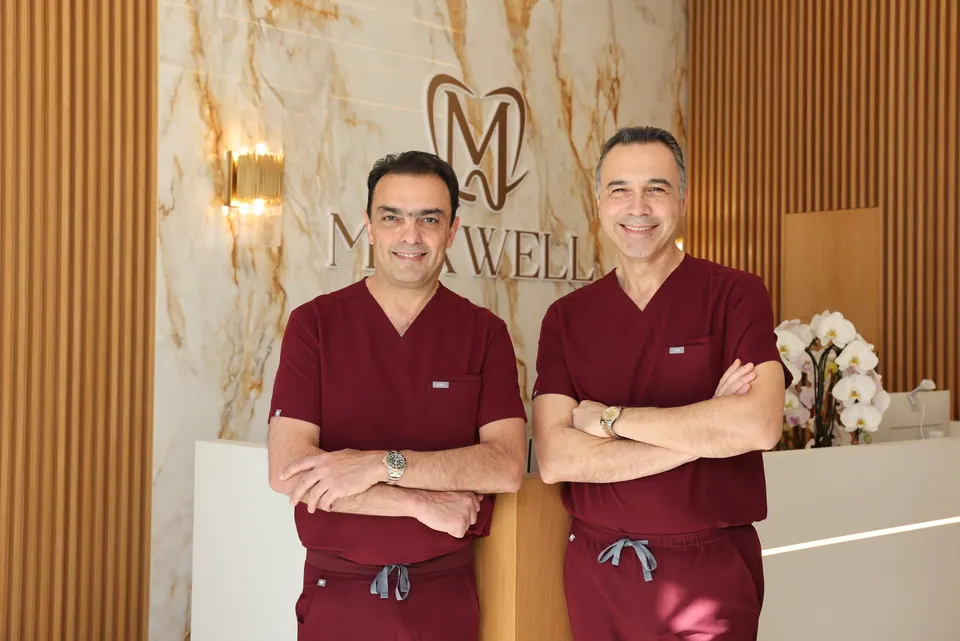
Two general dentists
Dr. Ali Ellioun has more than 30 years of clinical experience. He enjoys all aspects of general dentistry, with particular interests in restorative dentistry, root canal treatment, oral surgery, prosthodontics and implants.
Dr. Shahyar Ameryoun has over 25 years of experience in root canal therapy, crowns and bridges, restorative and preventive care, cosmetic dentistry, extractions and emergency care.
Both are registered with the Royal College of Dental Surgeons of Ontario and take the time to explain your options before treatment starts.
Coming to Maxwell Dental
Maxwell Dental is at 716 Sheppard Ave West in North York, at street level, with free parking on site. We are open Monday to Friday from 10 am to 6 pm and Saturday from 9 am to 4 pm. The team works in English, Farsi and Tagalog, so tell us which you prefer when you book.
If you are in pain, call (647) 479-4842 and we will tell you the earliest time we can see you.
Your first visit follows four steps: you request a time by phone or the form, complete your registration, have an exam with any X-rays your dentist recommends, and then hear your plan and costs before anything is started. Insurers are billed directly, CDCP patients are welcome, and you can ask for a cost estimate at any point.
Before your appointment
- Bring photo ID and your CDCP or insurance card if you have one
- Bring a list of the medicines you take
- New patients complete a short registration form; ask for it in advance if you like
- Tell us about any health changes since your last visit
Wilson Heights · Clanton Park · Bathurst Manor · Lansing–Westgate · Armour Heights · Westminster–Branson · Yonge and Sheppard
This page gives general information about smile makeovers and does not replace an examination. Your dentist will advise what is right for your mouth and health.
Last updated: November 24, 2026