
Dentures cost in North York
In short: the cost of dentures depends on the type: a complete denture for one jaw, a partial with an acrylic or cast metal frame, an immediate denture fitted on the day of extractions, or a denture held by implants. Extractions, relines and adjustments affect the total. Dentures are covered by the Canadian Dental Care Plan and, as a major service, by most insurance plans.
What a denture fee includes
Making a denture takes several appointments, and one fee normally covers all of them:
- Assessment of your gums, jaw and remaining teeth
- Impressions or scans and a record of your bite
- A wax try-in so you can approve the look
- The finished denture and fitting
- Adjustments in the first weeks
What changes the cost of dentures
- 1
Complete or partial
A complete denture replaces every tooth in a jaw. A partial replaces some and clips to the rest; the more complex the design, the higher the laboratory fee.
- 2
Frame material
Acrylic partials cost least. Cast metal frames cost more, are thinner and usually last longer. Flexible partials sit between.
- 3
Extractions
Teeth that cannot be kept are removed first, each billed as an extraction.
- 4
Immediate dentures
A denture fitted the day teeth are removed spares you a period without teeth, but needs a reline, and sometimes replacement, once the gums settle.
- 5
Implants
Two or more implants to hold a lower denture add significantly to the cost and to its stability.
What dentures cost to keep
A denture is not a one-time purchase. Gums and bone change shape, so a reline is usually needed every two to three years, and most dentures are replaced after five to ten. Budgeting for relines keeps a denture comfortable and avoids the sores and bone loss a loose one can cause.
Compared with bridges and implants, dentures have the lowest starting cost for replacing many teeth and involve no surgery. They also move more and restore less chewing force. Many people begin with a denture and add implants later to hold it, which is worth planning for at the outset.
What plans pay toward dentures
Employer plans usually pay a percentage for dentures as major services, with a limit on how often a denture for the same jaw can be replaced, commonly every five years or more. Relines and repairs are generally covered within their own limits.
The Canadian Dental Care Plan covers complete and partial removable dentures, relines, rebases and repairs, with frequency limits; the first placement of a partial denture needs pre-authorization. Implants are generally not covered. We check before starting.
Would a denture estimate help?
An exam gives you a real number. Costs depend on your mouth, so the estimate follows the examination.
Ways to manage the cost
- Ask whether a reline would do before replacing a denture
- Check when your plan last paid for a denture
- Compare acrylic and metal partials on one estimate
- Ask how implants could be added later
From question to written estimate
- 1
Request a visit
Send the form or call. Tell us what you want priced and whether you have insurance or a Canadian Dental Care Plan card, so we can book the right amount of time.
- 2
Examination
Your dentist examines the tooth or area and takes only the X-rays needed to plan. An estimate given without looking is a guess; this step is what makes the number reliable.
- 3
Options and an itemised estimate
You hear the options, including the simplest one, with the fee for each procedure listed separately. Take it home and think about it; there is no obligation to go ahead.
- 4
Coverage check
We bill insurers directly and can send a predetermination or a CDCP pre-authorization, so you know the amount you would pay yourself before treatment is booked.
How dental fees are set in Ontario
Dental care in Ontario is not covered by OHIP for most adults, so treatment is paid for by an insurance plan, a government program such as the Canadian Dental Care Plan, or the patient. Each dental office sets its own fees. Most refer to the suggested fee guide published each year by the Ontario Dental Association, which lists a code and a suggested fee for every procedure.
Insurance plans and the Canadian Dental Care Plan each pay according to their own fee schedules, which can be lower than a clinic's fee. The difference, plus any percentage your plan does not cover, is the part you pay. That is why two people having the same treatment can pay different amounts.
Know the cost first
After an exam, your dentist can give you an estimate listing each procedure. For larger treatment we can send it to your insurer as a predetermination, so you see what the plan will pay before you start.
Ask for an estimateThree ways patients pay
CDCP
- Bring
- Your CDCP card and photo ID
- We do
- Check what the plan covers before treatment and tell you about any amount you would pay
Work or private insurance
- Bring
- Your plan and member number
- We do
- Bill your insurer directly, so you pay only the part your plan doesn't cover
No insurance
- Ask
- For a cost estimate before treatment starts
- Pay
- All common payment methods are accepted
Questions about denture cost
Type, materials, the number of visits and the laboratory all differ. Compare what each fee includes.
Yes, removable complete and partial dentures, within limits.
Usually, once the later reline is counted.
Typically every two to three years.
The denture may be; the implants generally are not.
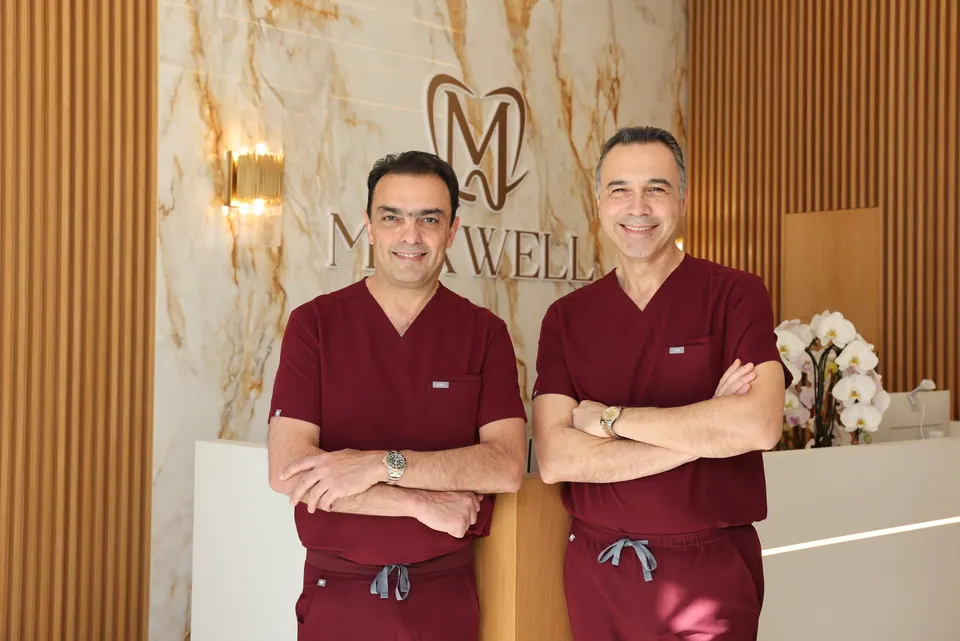
Two general dentists in North York
Dr. Ali Ellioun has more than 30 years of clinical experience, with particular interests in restorative dentistry, root canal treatment, oral surgery, prosthodontics and implants. Dr. Shahyar Ameryoun has over 25 years of experience in root canal therapy, crowns and bridges, restorative and preventive care, cosmetic dentistry, extractions and emergency care. Both are registered with the Royal College of Dental Surgeons of Ontario.
Maxwell Dental is at 716 Sheppard Ave West, at street level with free parking. We are open Monday to Friday from 10 am to 6 pm and Saturday from 9 am to 4 pm, and the team works in English, Farsi and Tagalog. Your first visit is an exam with any X-rays your dentist recommends, followed by a plan and costs before anything is started.
Wilson Heights · Clanton Park · Bathurst Manor · Lansing–Westgate · Armour Heights · Westminster–Branson · Yonge and Sheppard
- Dental bridge cost→
- Dental bonding cost→
- Emergency dental visit cost→
- Sedation dentistry cost→
- All cost guides→
This page gives general information and is not a quote. Fees depend on an examination and on your plan. No fee on this page is a promise of coverage.
Last updated: November 24, 2026