
Fluoride treatments in North York
In short: a fluoride treatment is a concentrated varnish or gel painted on the teeth to strengthen enamel and help prevent cavities. It takes a few minutes, usually at the end of a cleaning, and suits children and adults at higher risk of decay.
Fluoride treatments, explained
Enamel loses minerals every time you eat or drink something sugary or acidic, and gains them back from saliva between meals. Fluoride tips that balance towards repair: it helps minerals return to weakened enamel and makes the surface more resistant to acid.
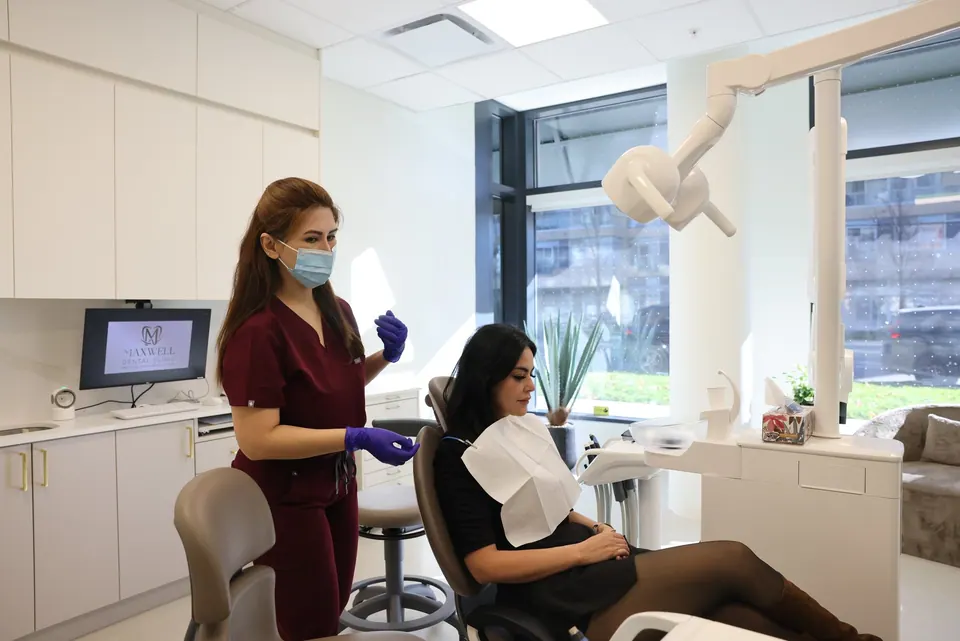
A professional fluoride treatment is much stronger than toothpaste. At Maxwell Dental it is usually a varnish painted on the teeth at the end of a cleaning. It sticks to the enamel and releases fluoride for several hours.
Is fluoride treatments right for you?
One tick is enough to ask. Your dentist will confirm what you need.
Who it suits
Children and teenagers, whose new adult teeth are more vulnerable, benefit most. Adults benefit too if they have a dry mouth from medicines, receding gums with exposed roots, braces or aligners, many fillings or a history of frequent cavities.
What you gain
- Strengthens enamel against decay
- Can reverse very early white-spot decay
- Reduces sensitivity on exposed roots
- Quick, painless and suitable for all ages
Step by step
- 1
Clean and dry
Teeth are cleaned and dried.
- 2
Apply
Varnish is painted on in seconds.
- 3
Set
It sets on contact with saliva.
The varnish has a mild taste and sets on contact with saliva, so there are no trays to bite on. Your dentist chooses how often you need it. Someone with a low risk of decay may not need it at every visit; someone with a high risk may benefit three or four times a year.
What it feels like
Painless. If you are nervous, say so when you book. Your dentist explains each step before it happens, agrees a signal you can use to pause, and goes at your pace.
- Care in English, فارسی or Tagalog
- Questions welcome at every step
- Ask about sedation if anxiety keeps you away
Afterwards
Your teeth may feel slightly coated for a few hours. Eat soft foods, avoid hot drinks and alcohol-based mouthwash for the rest of the day, and brush as normal the next morning.
Do
- Eat soft foods for a few hours
- Brush as normal the next morning
- Keep using fluoride toothpaste
Don't
- Eat hard or hot foods right away
- Brush or floss for the rest of the day
- Swallow toothpaste
Call us if you have questions about fluoride for a young child.
Fluoride at home
Use a toothpaste with fluoride twice a day: a smear the size of a grain of rice for children under three, a pea-sized amount from three to six, and a normal ribbon after that. Supervise young children so they spit out and don't swallow it. Don't rinse with water straight after brushing. Limiting snacks and sweet drinks between meals gives enamel time to recover, and that matters as much as the fluoride itself. If your mouth is dry from medicines, ask about extra fluoride and ways to increase saliva.
Three useful questions
- Is my risk of cavities low, moderate or high?
- Do I need a high-fluoride toothpaste?
- How often should I have varnish?
Alternatives to fluoride treatments
Fluoride toothpaste twice a day is the foundation. High-fluoride toothpaste or a daily rinse may be recommended for people at high risk. Sealants protect the grooves of back teeth and work alongside fluoride, not in place of it.
What you pay
A fluoride application is a small fee, often included in plans for children and, for some plans, adults at set intervals. We check what your plan allows.
CDCP
- Bring
- Your CDCP card and photo ID
- We do
- Check what the plan covers before treatment and tell you about any amount you would pay
Work or private insurance
- Bring
- Your plan and member number
- We do
- Bill your insurer directly, so you pay only the part your plan doesn't cover
No insurance
- Ask
- For a cost estimate before treatment starts
- Pay
- All common payment methods are accepted
Questions about fluoride treatments
Yes, in the small amounts used by a dentist. We choose the amount for your child's age.
Usually every six months, or more often if your risk of cavities is high.
Fluoridated water helps, but children at higher risk of cavities still benefit from varnish.
Not from professional applications at the intervals your dentist recommends.
No. Some varnishes leave a faint tint for a few hours that brushes off.
No. Fluoride strengthens all tooth surfaces; a sealant physically covers the grooves of back teeth.
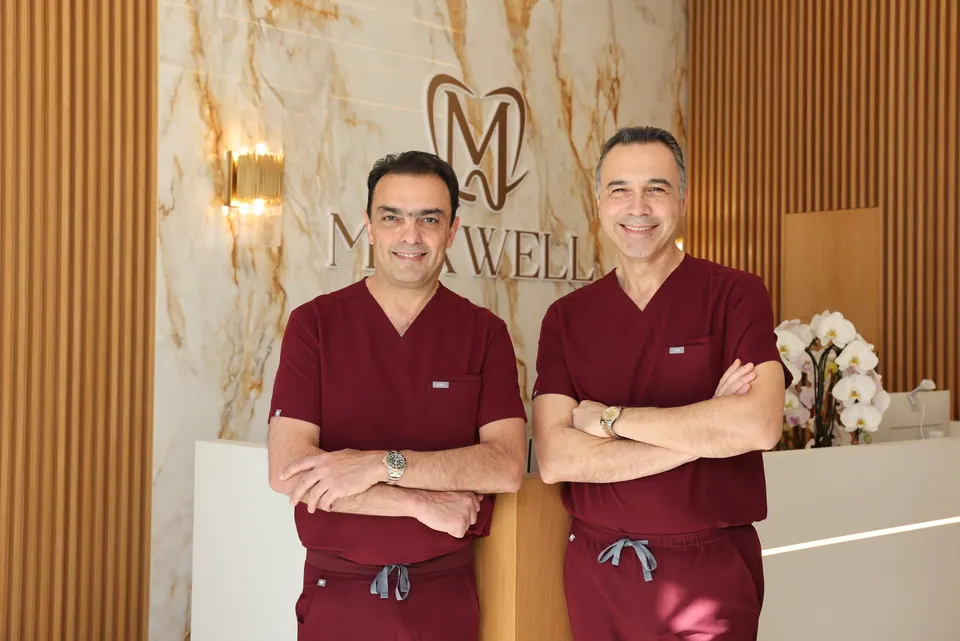
Two general dentists
Dr. Ali Ellioun has more than 30 years of clinical experience. He enjoys all aspects of general dentistry, with particular interests in restorative dentistry, root canal treatment, oral surgery, prosthodontics and implants.
Dr. Shahyar Ameryoun has over 25 years of experience in root canal therapy, crowns and bridges, restorative and preventive care, cosmetic dentistry, extractions and emergency care.
Both are registered with the Royal College of Dental Surgeons of Ontario and take the time to explain your options before treatment starts.
Coming to Maxwell Dental
Maxwell Dental is at 716 Sheppard Ave West in North York, at street level, with free parking on site. We are open Monday to Friday from 10 am to 6 pm and Saturday from 9 am to 4 pm. The team works in English, Farsi and Tagalog, so tell us which you prefer when you book.
If you are in pain, call (647) 479-4842 and we will tell you the earliest time we can see you.
Your first visit follows four steps: you request a time by phone or the form, complete your registration, have an exam with any X-rays your dentist recommends, and then hear your plan and costs before anything is started. Insurers are billed directly, CDCP patients are welcome, and you can ask for a cost estimate at any point.
Before your appointment
- Bring photo ID and your CDCP or insurance card if you have one
- Bring a list of the medicines you take
- New patients complete a short registration form; ask for it in advance if you like
- Tell us about any health changes since your last visit
Wilson Heights · Clanton Park · Bathurst Manor · Lansing–Westgate · Armour Heights · Westminster–Branson · Yonge and Sheppard
This page gives general information about fluoride treatments and does not replace an examination. Your dentist will advise what is right for your mouth and health.
Last updated: November 24, 2026