
Root canal retreatment in North York
In short: root canal retreatment is a second root canal on a tooth that was treated before but has not healed or has become infected again. The old filling material is removed, the canals are cleaned and disinfected again, and the tooth is resealed.
Root canal retreatment, explained
Most root canal treatments heal and last for many years. Occasionally one does not: bacteria remain in a narrow or curved canal that was hard to reach, or return later through a cracked filling, new decay or a crown that has leaked. The tooth may ache, feel tender to bite on, or show no symptoms and be found on an X-ray.
Retreatment gives the tooth a second chance. Your dentist removes the crown or filling as needed, takes out the old root filling, looks for extra or missed canals, disinfects and reseals. Both dentists at Maxwell Dental list root canal treatment among their interests, and complex cases may be referred to an endodontist.
Is a root canal retreatment right for you?
One tick is enough to ask. Your dentist will confirm what you need.
Who it suits
It suits teeth that are otherwise restorable and worth keeping, where the cause of failure can be corrected from inside the tooth. Where a post, a sound crown or blocked canals make that impractical, root-end surgery may be suggested. A tooth with a vertical crack usually has to be removed.
What you gain
- Keeps your natural tooth
- Removes persistent infection
- Avoids extraction and replacement
- Can relieve long-standing tenderness
Step by step
- 1
Assess
An exam and X-rays show why the tooth has not healed.
- 2
Reopen
The tooth is numbed and the old root filling removed.
- 3
Clean
The canals are cleaned, disinfected and shaped.
- 4
Seal
The canals are refilled and the tooth rebuilt.
Retreatment takes longer than a first root canal because old materials must be removed carefully. A dressing may be left in the canals between visits to help disinfect them. Once the root is sealed, a new core and usually a crown protect the tooth from leaking again.
What it feels like
Numbed. If you are nervous, say so when you book. Your dentist explains each step before it happens, agrees a signal you can use to pause, and goes at your pace.
- Care in English, فارسی or Tagalog
- Questions welcome at every step
- Ask about sedation if anxiety keeps you away
Afterwards
Tenderness for several days is common and is managed with ordinary pain relief. Avoid chewing on the tooth until it has its permanent restoration. Healing of the bone at the root tip is checked on an X-ray some months later.
Do
- Chew on the other side until restored
- Take pain relief as advised
- Return for the final crown or filling
Don't
- Delay the permanent restoration
- Bite hard on the tooth
- Stop antibiotics early if prescribed
Call us if swelling develops, or pain worsens after the first few days.
Is this tooth worth saving?
The answer depends on how much sound tooth remains, whether a crack is present, how healthy the gum and bone are, and how important the tooth is to your bite. Ask your dentist what they think caused the failure and whether it can be corrected. Compare the cost and likely life of retreatment and a new crown with extraction and an implant or bridge. Either can be the right choice.
Three useful questions
- Why has this root canal failed?
- Retreatment or root-end surgery?
- What if I choose extraction instead?
Alternatives to root canal retreatment
Root-end surgery treats the infection from the tip of the root. Extraction removes the problem and leaves a gap to replace with an implant, bridge or denture. Leaving a failing tooth risks flare-ups and bone loss.
What you pay
Retreatment usually costs more than a first root canal because of the extra time. Root canal treatment is covered under many insurance plans and by the Canadian Dental Care Plan, in some cases with pre-authorization. We check before starting.
CDCP
- Bring
- Your CDCP card and photo ID
- We do
- Check what the plan covers before treatment and tell you about any amount you would pay
Work or private insurance
- Bring
- Your plan and member number
- We do
- Bill your insurer directly, so you pay only the part your plan doesn't cover
No insurance
- Ask
- For a cost estimate before treatment starts
- Pay
- All common payment methods are accepted
Questions about root canal retreatment
A missed canal, a crack, new decay or a leaking crown can let bacteria back in.
Often, if the tooth is otherwise sound. Your dentist explains the chances and the alternatives.
Many retreated teeth heal well. The chance depends on why the first treatment failed.
It is done under local anaesthetic and usually feels similar.
Often yes, to seal the tooth properly.
Pain on biting, a gum pimple, swelling, or a dark area at the root on an X-ray.
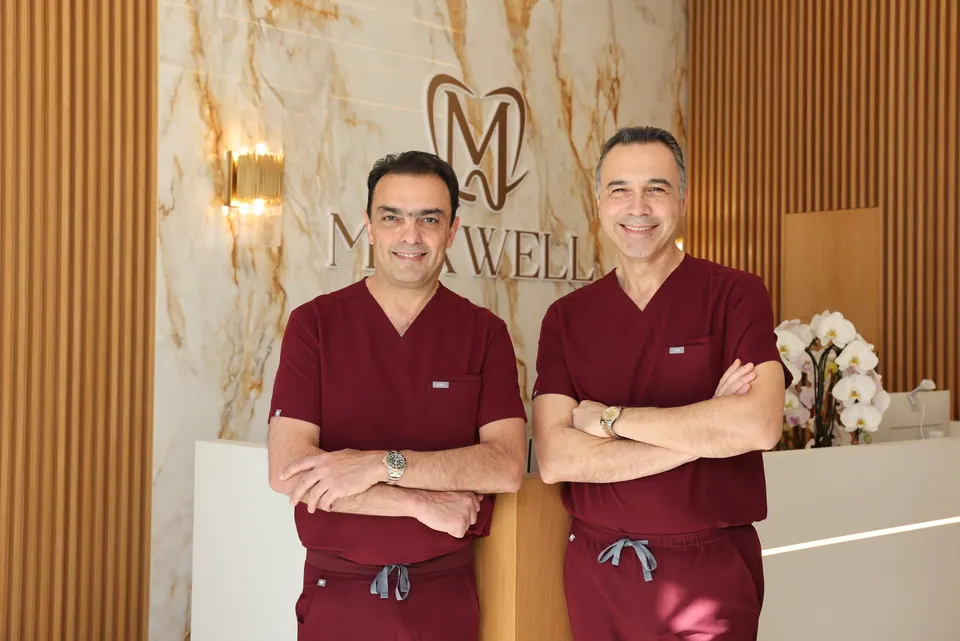
Two general dentists
Dr. Ali Ellioun has more than 30 years of clinical experience. He enjoys all aspects of general dentistry, with particular interests in restorative dentistry, root canal treatment, oral surgery, prosthodontics and implants.
Dr. Shahyar Ameryoun has over 25 years of experience in root canal therapy, crowns and bridges, restorative and preventive care, cosmetic dentistry, extractions and emergency care.
Both are registered with the Royal College of Dental Surgeons of Ontario and take the time to explain your options before treatment starts.
Coming to Maxwell Dental
Maxwell Dental is at 716 Sheppard Ave West in North York, at street level, with free parking on site. We are open Monday to Friday from 10 am to 6 pm and Saturday from 9 am to 4 pm. The team works in English, Farsi and Tagalog, so tell us which you prefer when you book.
If you are in pain, call (647) 479-4842 and we will tell you the earliest time we can see you.
Your first visit follows four steps: you request a time by phone or the form, complete your registration, have an exam with any X-rays your dentist recommends, and then hear your plan and costs before anything is started. Insurers are billed directly, CDCP patients are welcome, and you can ask for a cost estimate at any point.
Before your appointment
- Bring photo ID and your CDCP or insurance card if you have one
- Bring a list of the medicines you take
- New patients complete a short registration form; ask for it in advance if you like
- Tell us about any health changes since your last visit
Wilson Heights · Clanton Park · Bathurst Manor · Lansing–Westgate · Armour Heights · Westminster–Branson · Yonge and Sheppard
This page gives general information about root canal retreatment and does not replace an examination. Your dentist will advise what is right for your mouth and health.
Last updated: November 24, 2026