
Your child's first dental visit in Canada
In short: A child's first dental visit in Canada is a gentle check of the teeth, gums and bite, with time for your questions. At Maxwell Dental at 716 Sheppard Ave West in North York, parents can ask their questions in English, Farsi or Tagalog while the child gets used to the clinic. Bring any records from your home country, and ask us to check whether a public program or your plan covers the visit.
Why book soon after you arrive
Moving countries is busy, and a dental check-up for the children is rarely near the top of the list. It is worth doing early all the same. A first visit gives you a clear picture of each child's teeth, finds small cavities before they hurt, and gives your child a calm introduction to a dental clinic here before any treatment is needed.
Dental advice also differs between countries, and you may hear things that are new: a first visit by the first birthday, fluoride varnish, sealants on the back teeth, and no juice or milk in bed. Your dentist can explain what is recommended here and why, and you can decide what suits your family.
What happens at the visit
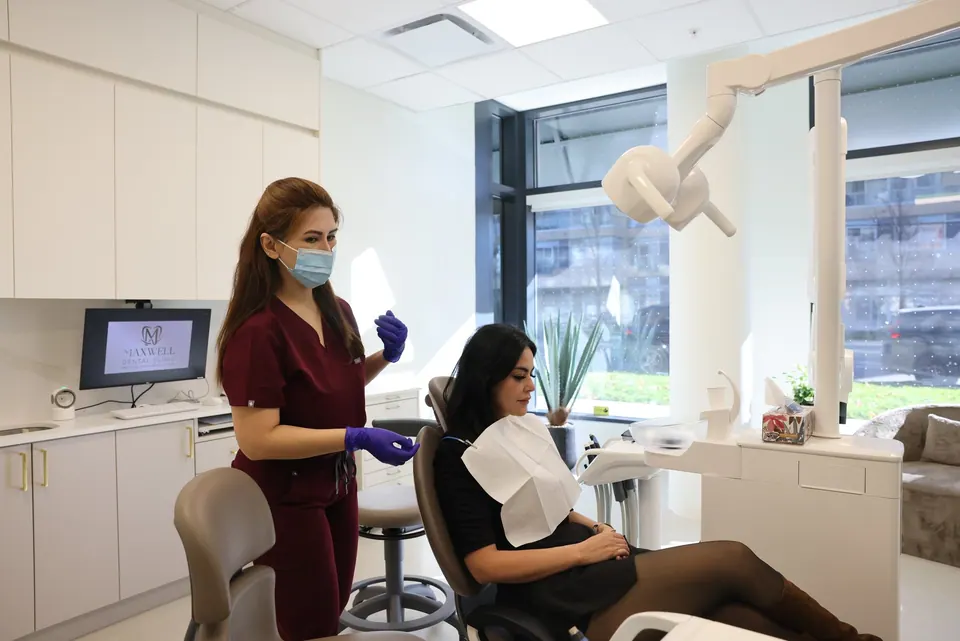
For a baby or toddler, the visit is short. The dentist looks at the teeth and gums, often with the child on your lap, checks how the teeth are coming through, and talks with you about cleaning, feeding and habits such as thumb-sucking. For an older child, the dentist counts and checks each tooth, looks at the bite and the gums, and may recommend X-rays if there is a reason, such as teeth that touch tightly where decay cannot be seen.
A cleaning and fluoride may be done at the same visit or the next one. If a cavity is found, you are told what it is, what the options are and what each costs before anything is done. Nothing is started without your consent.
Children take their cue from the adult with them. Describe the visit in simple, positive words, avoid words like "needle" or "hurt", and let the dental team explain things in their own way.
What would you like from the first visit?
Tell us when you book. We plan a gentle first visit and check coverage before any treatment.
What to bring
Bring your child's health card or other ID, any dental plan details, and a list of medicines and allergies. If your child had dental treatment or X-rays before you moved, bring the records or photos of them. Tell the dentist about any treatment done under sedation or general anaesthetic, and about habits you are worried about.
If your child speaks more English than you do, that is fine: the dentist talks with the child, and you can ask your own questions in Farsi or Tagalog. Say which language you prefer when you book.
Who pays for children's dental care
Provincial health insurance does not pay for routine dental care, but there are several routes for children. A parent's workplace plan usually includes dependants. The federal Canadian Dental Care Plan covers children under 18 in families that meet its conditions. Ontario runs Healthy Smiles Ontario for children 17 and under in lower-income households. Each has its own rules, and families who have recently arrived should check the official pages linked below.
Ask us when you book which programs Maxwell Dental can bill, and bring any card or letter you have received. If none applies yet, ask for an estimate; an exam is the least costly way to find out what, if anything, needs doing.
Protecting young teeth in a new country
A new country often means new foods, and many snacks and drinks sold for children here are high in sugar. Keep sweet drinks and treats to mealtimes, and offer water in between; Toronto tap water is fluoridated, which helps protect teeth. Brush your child's teeth twice a day with fluoride toothpaste. Only a small amount is needed, and the right amount depends on age, so ask your dentist what to use for each child. Help with brushing until they can do it well on their own, usually around age seven or eight.
Baby teeth matter. They hold space for the adult teeth and are needed for eating and speech, and decay in them can cause pain and infection. Adult molars arrive at around age six, behind the baby teeth, and are easy to miss; sealants can protect their grooves. If your child plays contact sports, ask about a mouthguard.
School, screening and letters you may receive
Public health units in Ontario screen children's teeth at school in certain grades. If your child comes home with a letter saying a dental visit is recommended, it is not a diagnosis, but it is a reason to book an exam. Bring the letter with you.
Booking
Maxwell Dental is open Monday to Friday from 10 am to 6 pm and Saturday from 9 am to 4 pm, which helps with school hours. Brothers and sisters can often be booked one after another; ask when you call. You can complete the new patient form online before you come.
Questions about a child's first dental visit
By the first birthday or when the first tooth appears, and regularly after that.
Yes. Young children are often examined on a parent's lap.
Only if the dentist has a reason, and it is explained to you first.
It covers children under 18 in families that meet its conditions. Check the official page for the rules that apply to you.
It helps to know. Bring any records, and tell the dentist what was done.
Tell us beforehand. A first visit can be just a look and a chat, and treatment can wait for another day when it is not urgent.
This page gives general information and does not replace an examination or official program information. Programs and rules change; check the official sources below.
Last updated: November 24, 2026