
Night guards in North York
In short: a night guard is a custom-made appliance worn over the teeth during sleep. It stops the upper and lower teeth grinding against each other, which protects enamel, fillings and crowns and can ease jaw soreness and morning headaches.
Night guards, explained
Many people clench or grind their teeth in their sleep without knowing it. The forces are far higher than normal chewing and, night after night, they flatten teeth, crack fillings, loosen crowns and tire the jaw muscles. Grinding is linked with stress, sleep problems and the way the teeth meet.
A night guard does not stop the habit; it takes the load. It is made from a scan or impression of your own teeth, usually for the upper arch, in a hard, smooth material that lets the lower teeth slide instead of locking. A guard made for you is thinner and more stable than one bought in a shop.
Is night guards right for you?
One tick is enough to ask. Your dentist will confirm what you need.
Who it suits
Night guards suit adults who grind or clench, people with worn or chipped teeth, and anyone who has invested in crowns, veneers or implants and wants to protect them. If jaw pain or clicking is your main problem, your dentist will also assess the jaw joint, because a different kind of splint may be more suitable.
What you gain
- Protects enamel and dental work from wear
- Can ease jaw soreness and morning headaches
- Made to fit your teeth precisely
- Comfortable enough to sleep in
Step by step
- 1
Check
Your dentist looks for wear, cracks and tender jaw muscles.
- 2
Scan
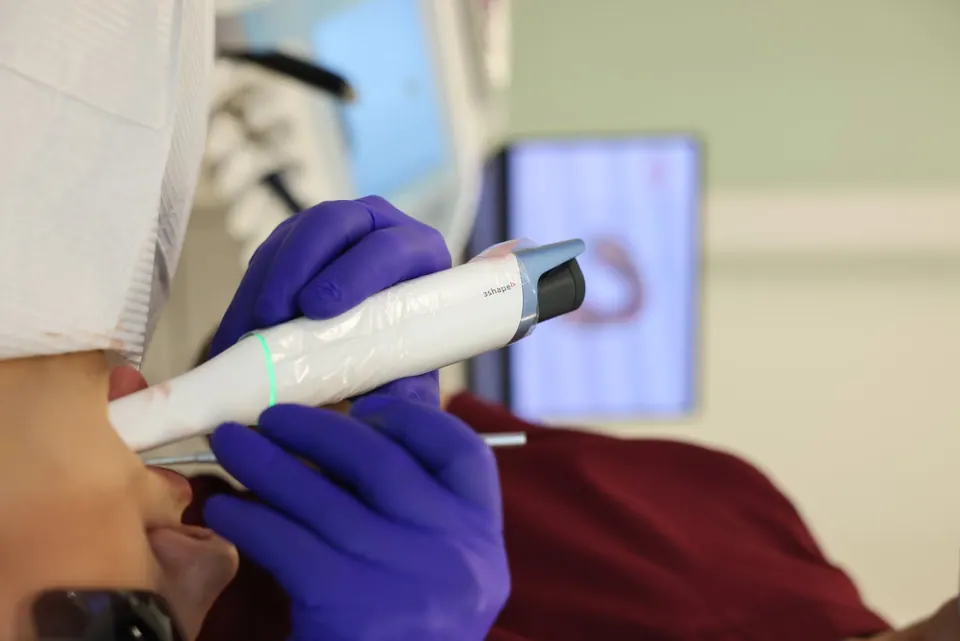
A digital scan or impression records your teeth.
- 3
Fit
The guard is adjusted so your bite feels even and comfortable.
At the fitting, your dentist checks that the guard seats fully, does not rock and meets the opposing teeth evenly. Small adjustments make a large difference to comfort. It normally takes a week or two to get used to, and most people then find it hard to sleep without.
What it feels like
No numbing needed. If you are nervous, say so when you book. Your dentist explains each step before it happens, agrees a signal you can use to pause, and goes at your pace.
- Care in English, فارسی or Tagalog
- Questions welcome at every step
- Ask about sedation if anxiety keeps you away
Afterwards
Rinse the guard in cool water each morning, brush it gently and let it dry in its case. Bring it to your check-ups so the fit and wear can be reviewed. Wear marks on the guard are a sign that it is doing its job.
Do
- Wear it every night
- Rinse and brush it each morning
- Bring it to your check-ups
Don't
- Clean it with hot water
- Leave it where a pet can reach it
- Keep wearing a guard that has cracked
Call us if the guard feels tight, rocks or your bite feels different in the morning.
Signs you may be grinding
Because grinding happens in sleep, the evidence is indirect. Look for flat or chipped edges on front teeth, small dents where the enamel meets the gum, teeth that have become sensitive to cold, and a ridge along the inside of the cheeks. A tired jaw on waking, dull headaches at the temples and fillings that fracture without an obvious cause are further clues. Dentists often spot wear before patients notice it, which is one reason regular exams matter.
Three useful questions
- Is my wear from grinding or from acid?
- Should the guard be upper or lower?
- Does my plan cover a guard?
Alternatives to night guards
Shop-bought boil-and-bite guards are cheaper but bulky, and a poor fit can strain the jaw. Addressing stress, caffeine and sleep habits can reduce grinding. Worn teeth may also need rebuilding with bonding or crowns, with a guard to protect the result.
What you pay
The cost reflects the laboratory work and fitting visits. Many insurance plans cover a night guard every few years; coverage under the Canadian Dental Care Plan is limited and may need pre-authorization. We check your plan before making one.
CDCP
- Bring
- Your CDCP card and photo ID
- We do
- Check what the plan covers before treatment and tell you about any amount you would pay
Work or private insurance
- Bring
- Your plan and member number
- We do
- Bill your insurer directly, so you pay only the part your plan doesn't cover
No insurance
- Ask
- For a cost estimate before treatment starts
- Pay
- All common payment methods are accepted
Questions about night guards
Often several years. Heavy grinders wear through them sooner.
No. A night guard is thin and hard for sleep; a sports guard is thick and soft for impact.
Usually upper, but your dentist chooses based on your bite and any missing teeth.
It protects the teeth and often relaxes the muscles, but the habit may continue.
Not at the same time. Ask about one appliance that does both jobs.
A brief change is common and settles within minutes. Tell us if it lasts.

Two general dentists
Dr. Ali Ellioun has more than 30 years of clinical experience. He enjoys all aspects of general dentistry, with particular interests in restorative dentistry, root canal treatment, oral surgery, prosthodontics and implants.
Dr. Shahyar Ameryoun has over 25 years of experience in root canal therapy, crowns and bridges, restorative and preventive care, cosmetic dentistry, extractions and emergency care.
Both are registered with the Royal College of Dental Surgeons of Ontario and take the time to explain your options before treatment starts.
Coming to Maxwell Dental
Maxwell Dental is at 716 Sheppard Ave West in North York, at street level, with free parking on site. We are open Monday to Friday from 10 am to 6 pm and Saturday from 9 am to 4 pm. The team works in English, Farsi and Tagalog, so tell us which you prefer when you book.
If you are in pain, call (647) 479-4842 and we will tell you the earliest time we can see you.
Your first visit follows four steps: you request a time by phone or the form, complete your registration, have an exam with any X-rays your dentist recommends, and then hear your plan and costs before anything is started. Insurers are billed directly, CDCP patients are welcome, and you can ask for a cost estimate at any point.
Before your appointment
- Bring photo ID and your CDCP or insurance card if you have one
- Bring a list of the medicines you take
- New patients complete a short registration form; ask for it in advance if you like
- Tell us about any health changes since your last visit
Wilson Heights · Clanton Park · Bathurst Manor · Lansing–Westgate · Armour Heights · Westminster–Branson · Yonge and Sheppard
This page gives general information about night guards and does not replace an examination. Your dentist will advise what is right for your mouth and health.
Last updated: November 24, 2026