
Dental care for visiting parents and relatives
In short: Visitors to Canada can see a dentist without provincial health coverage: they book like anyone else and pay for the visit, then claim from travel insurance if their policy includes dental emergencies. At Maxwell Dental at 716 Sheppard Ave West in North York, visiting parents and relatives can be seen in English, Farsi or Tagalog, with an estimate before any treatment.
When a visit turns into a toothache
It happens often: a parent arrives for a few months, and in the second week a crown comes off, a denture cracks or an old filling starts to ache. Long flights, a change of diet and dental work that was already near the end of its life all play a part. The family is then unsure where to take them, what it will cost and whether anyone will explain it in their language.
The short answer is that a visitor can be seen at a private dental clinic like any other patient. No health card, referral or residency is needed. What differs is who pays: public programs such as the Canadian Dental Care Plan are for residents, so a visitor pays for the visit and, where the policy allows, claims it back from travel insurance.
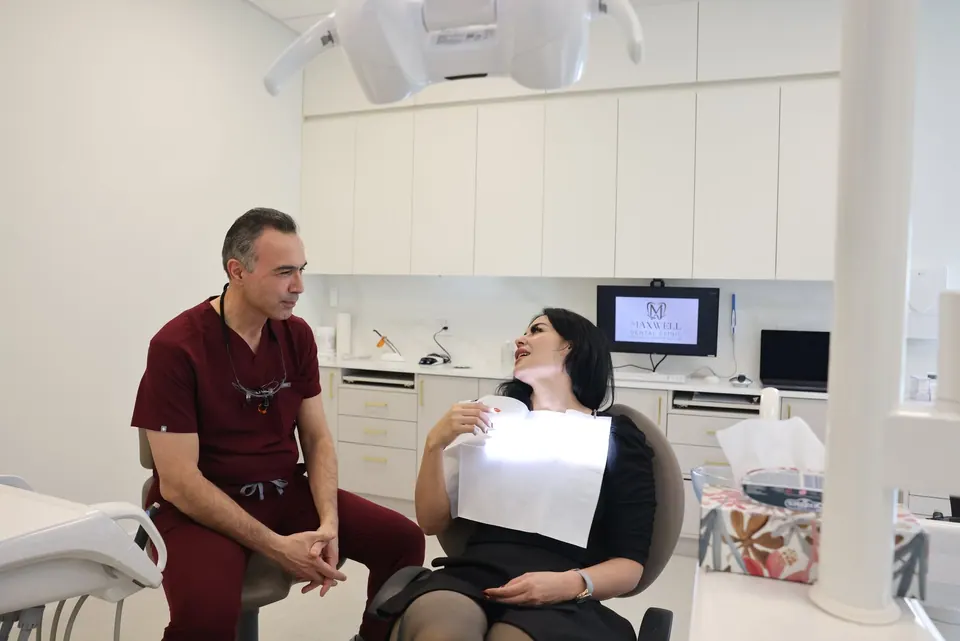
What we can do during a short stay
Most urgent problems can be dealt with in one or two visits: relieving a toothache, treating an infection, re-cementing a crown, smoothing or repairing a broken tooth, adjusting a denture that rubs, and removing a tooth that cannot be saved. Exams, X-rays and cleanings are also straightforward during a visit.
Treatment that needs months, such as implants or a long course of aligners, is usually not sensible unless the stay is long, because the follow-up matters as much as the procedure. In that case your dentist can stabilise the problem here, so that the rest can be completed at home.
Tell us the departure date when you book. It lets us plan what can be finished in time and what should be left for home, and it avoids starting something that cannot be completed.
What does your visitor need?
Tell us the departure date when you book. We plan what can be finished during the stay and give an estimate first.
Paying, travel insurance and receipts
You are given an estimate before treatment and pay at the visit. Travel medical policies, including those bought for a Super Visa, often cover emergency dental care up to a limit and usually exclude routine or pre-existing problems. Read the policy or call the insurer before the visit if you can, and ask whether they need to approve treatment in advance.
Insurers set their own rules for claims, so ask yours what documents it needs before the visit, and keep the policy number with you. If the policy has a deductible or a low dental limit, it is worth knowing that before deciding how much treatment to have during the stay and how much to leave for home.
What to bring
Bring the passport or other photo ID, the travel insurance policy, and a list of medicines with their doses. Medicine brand names differ between countries, so the boxes themselves are best. Mention blood thinners, heart conditions, diabetes and medicines for bone density in particular, because they affect extractions and healing.
If there are dental records from home, such as X-rays or the details of an implant, bring them or have a relative send photos. If a crown or a piece of denture has come off, keep it in a clean container and bring it. Do not use household glue.
For the family member who is hosting
You are welcome to come in with your parent, but they should hear the explanation themselves. Ask for Farsi or Tagalog when you book so the plan is explained in the language they prefer and they can ask their own questions. Consent for treatment comes from the patient.
A check-up early in a long stay is worth considering even if nothing hurts. Small problems found in the first weeks can be fixed before the flight home; the same problems found in the last week often cannot. If your parent later becomes a resident, coverage options change, and our guide for newcomers explains them.
Dentures, crowns and other things that break on a trip
Dentures are the most common problem we see in visiting parents. A denture that has been comfortable for years can start to rub after a long flight and a few weeks of different food, and an old one can crack. A sore spot is usually eased with a small adjustment. If a denture has cracked or a tooth has come off it, bring every piece and do not try to glue it; your dentist will look at it and tell you what the options are. A denture that has become loose may need a reline, which makes it fit the gums again.
A crown that has come off should be brought in as soon as possible. If the tooth underneath is sound, it can usually be cleaned and cemented back. Until then, keep the area clean, chew on the other side, and avoid sticky food.
If it is an emergency
Call the clinic during opening hours for severe toothache, a broken tooth or a lost crown, and we will tell you the earliest time we can see them. Swelling of the face that is spreading, a fever, or difficulty swallowing or breathing needs a hospital emergency department straight away. Maxwell Dental is open Monday to Friday from 10 am to 6 pm and Saturday from 9 am to 4 pm.
Questions about dental care for visitors
Yes. Visitors book like any other patient and pay for the visit themselves.
No. The plan is for Canadian residents who meet its conditions.
Many policies cover emergency dental care up to a limit. Check the policy, and ask the insurer whether approval is needed first.
Yes. Call or send the online request. For an urgent problem, call during opening hours and we will tell you the earliest time.
No, but bring the list or the boxes. Some medicines change how treatment is planned.
This page gives general information and does not replace an examination or official program information. Programs and rules change; check the official sources below.
Last updated: November 24, 2026