
Looking after dental work done abroad
In short: Dental work done in another country can be checked, maintained and often repaired in Ontario. What your dentist needs is information: recent X-rays, the brand and size of any implant, and roughly when each treatment was done. At Maxwell Dental at 716 Sheppard Ave West in North York you can explain your history in English, Farsi or Tagalog, and you receive an estimate before anything is started.
Why people have treatment abroad, and what happens afterwards
Many people in Toronto have had dental work in the country they came from, or on a trip back: it may be where their family dentist is, where they lived when the tooth broke, or where the price was lower. There is nothing unusual about it, and no reason to feel awkward telling a dentist here.
The difficulty comes later. Every crown, veneer, implant and root canal filling needs checking and, eventually, maintenance. When the dentist who did the work is a twelve-hour flight away, a chipped veneer or a loose implant crown has to be dealt with locally, and the dentist here starts without the notes.
What to bring so your dentist is not working blind
For implants: the brand, the model, and the diameter and length of each one, which the clinic that placed them can give you on a card or a sticker sheet. Parts from one implant system do not fit another, so without this a simple loose screw can become a long search. For crowns, bridges and veneers: the material, if you know it, and the date. For root canal treatment: the date and any X-ray taken at the end.
A photo of the paperwork on your phone is enough. If you have nothing, your dentist can still examine and X-ray the area and tell you what can be identified.
What brings you in?
Bring whatever records you have. We start with an exam and tell you what can be repaired before you decide anything.
What can usually be done here
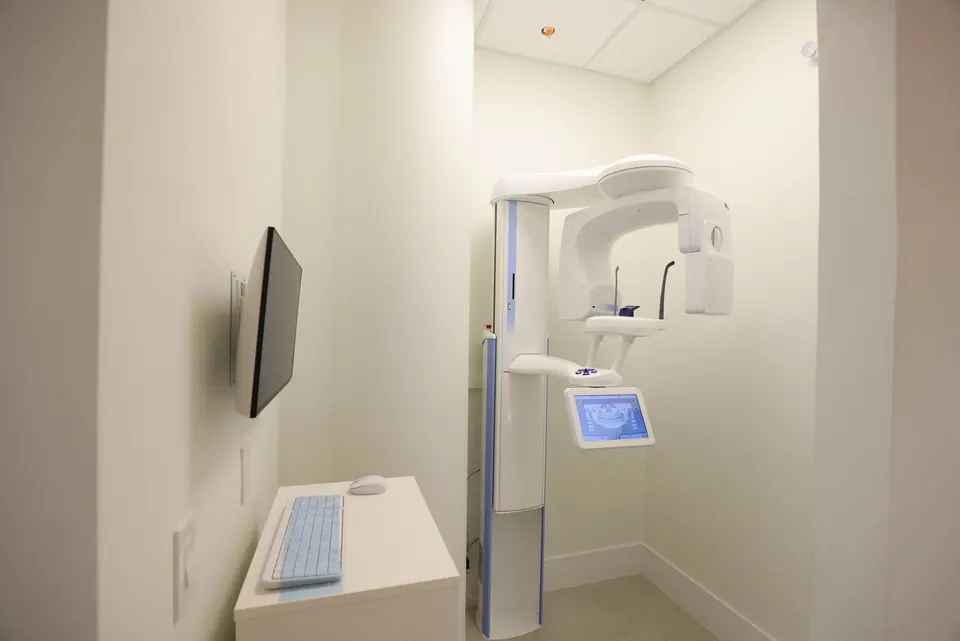
An exam and X-rays show how the work is doing: the fit of crown edges, the bone around implants, the health of the gum, and any decay beneath fillings or veneers. Much of the time the answer is that everything is sound and only needs normal cleaning and check-ups.
Common repairs include polishing or patching chipped composite veneers, re-cementing a crown or bridge, replacing a single crown or veneer to match the others, tightening or replacing an implant crown when the system is known, re-treating a root canal that has failed, and adjusting the bite. Your dentist explains what is repairable, what should be replaced, and what is better left alone and monitored.
Sometimes the honest answer is that a tooth under older work cannot be saved, or that a case is better looked after by a specialist. You will be told that plainly, with the options and their costs.
Planning treatment abroad? Questions worth asking first
If you are considering treatment on a trip, compare like with like. Ask what the price includes: the assessment and X-rays, the materials and brand, laboratory work, temporary teeth and follow-up. Ask how many visits are needed and how far apart, since implants and some crown work cannot be compressed into two weeks without added risk.
Ask who will handle problems after you fly back, and get everything in writing: a treatment summary, X-rays, and implant details. Add the cost of travel and time, and the cost of any repair you might need here. For some people the sums still favour treatment abroad; for others, staging treatment locally through a workplace plan or the Canadian Dental Care Plan costs less than expected. We are glad to give an estimate so you can compare.
Implants, veneers and root canals: what we look for
Around implants, your dentist checks that the gum is healthy, that the crown is tight and that the bone level on the X-ray is stable. Bleeding, a bad taste or a crown that moves are reasons to come in soon, since early inflammation around an implant is far easier to treat than bone loss.
With veneers and composite, the edges are checked for staining, chips and decay, and the gum for inflammation, which can follow when the edges are bulky. With root canal treatment, an X-ray shows whether the bone at the root tip has healed. A root-filled back tooth without a crown is at higher risk of fracture, so your dentist may suggest protecting it.
Looking after the work you already have
Whatever the country, dental work lasts longest in a clean mouth. Brush twice a day with fluoride toothpaste and clean between the teeth daily, including under bridges and around implants. If you grind your teeth, a night guard protects veneers, crowns and implant crowns from chipping. Have a cleaning and exam every six months, or as often as your dentist advises, so that small changes are caught while they are simple to fix.
Costs and coverage
Repairs to a damaged tooth are often treated as a basic or major service by insurance plans, while purely cosmetic replacements are usually not covered. The Canadian Dental Care Plan does not cover implants or cosmetic treatment. We check your coverage and give you an estimate before treatment. The clinic is open Monday to Friday from 10 am to 6 pm and Saturday from 9 am to 4 pm.
Questions about dental work done in another country
Yes, when the implant system can be identified and parts are available. Bring the brand and size if you can.
No. Sound work is left alone. Your dentist recommends repair or replacement only where there is a problem.
Often it can be polished or patched in one visit without replacing the whole veneer.
Yes. An exam and X-rays show a great deal, though some implant parts cannot be identified from an X-ray alone.
It depends on the plan and the type of repair. We check before treatment.
It is possible, but someone must be responsible for each stage. Ask for written records at every step.
This page gives general information and does not replace an examination or official program information. Programs and rules change; check the official sources below.
Last updated: November 24, 2026